About Magnolia stellata (Siebold & Zucc.) Maxim.
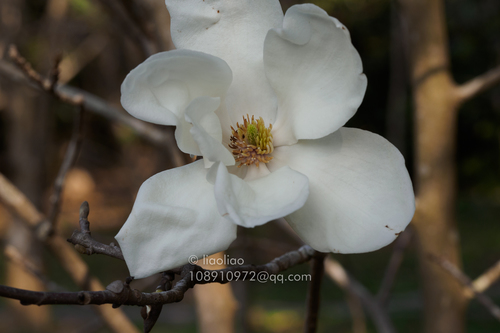
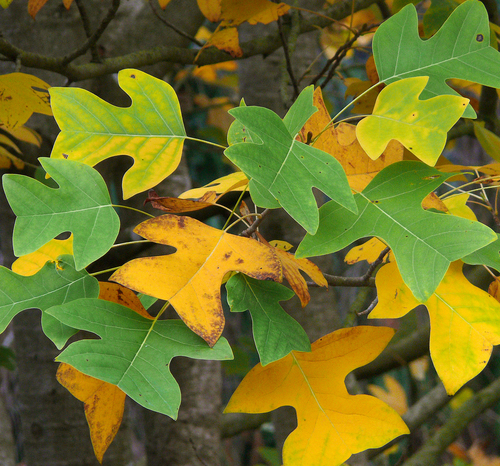
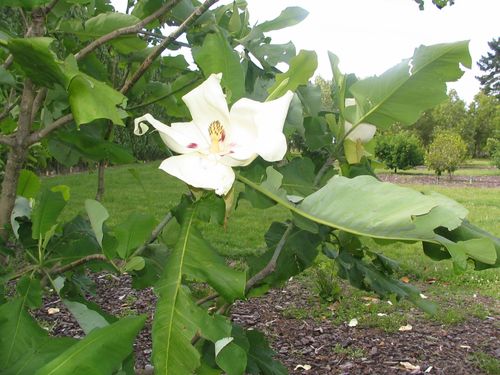
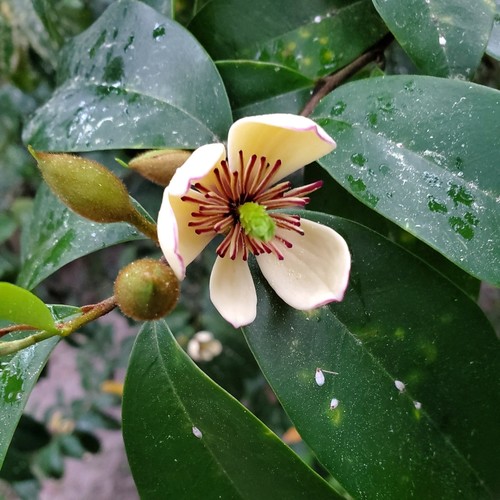
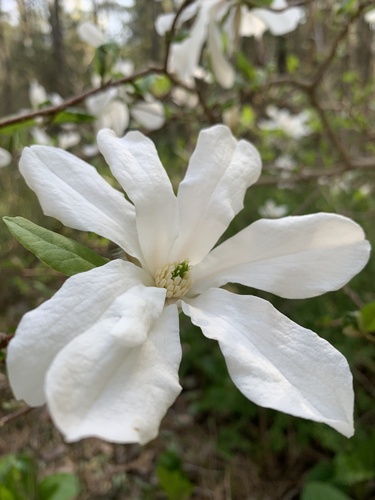
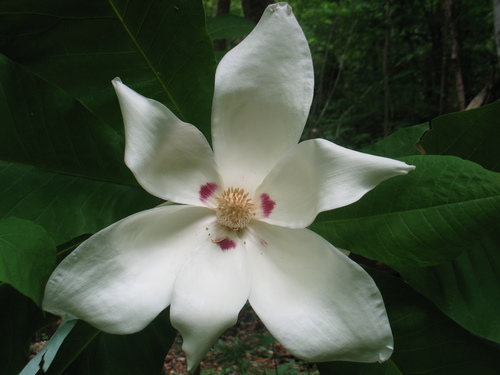
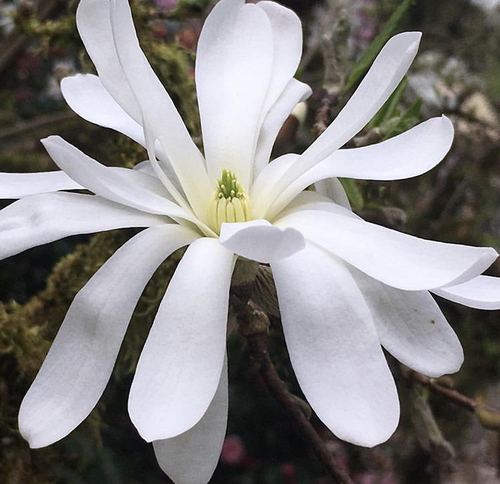
Magnolia stellata (Siebold & Zucc.) Maxim. is a deciduous shrub. At maturity, it reaches 1.5 to 2.5 metres (5 to 8 ft) in height and spreads to 4.6 m (15 ft) in width. Young plants grow in an upright, oval shape, and become wider and more mounded as they age. This species blooms at a young age. Its slightly fragrant flowers are 7–10 cm (3–4 in) wide, and cover the bare plant in late winter or early spring before leaves emerge. Natural variation in flower colour ranges from white to rich pink, and the pink colour can change from year to year. The flowers are star-shaped, with at least 12 thin, delicate petal-like tepals; some cultivars have more than 30 tepals. Newly opened leaves are bronze-green, turn deep green when mature, and turn yellow before dropping in autumn. Leaves are oblong, and measure about 10 cm (4 in) long by around 4 cm (1.6 in) wide. M. stellata produces a reddish-green, knobby aggregate fruit that is about 5 cm (2 in) long, and matures in early autumn. Mature fruit opens through slits to reveal orange-red seeds, but fruits often drop before developing fully. Young twigs have smooth, shiny chestnut brown bark, while main trunks have smooth, silvery grey bark. Like the related saucer magnolia (Magnolia × soulangeana), it is deciduous, so it displays a twiggy, bare frame in winter. Its thick, fleshy roots grow fairly close to the surface and do not tolerate heavy disturbance. After being introduced to the United States in 1862 by Dr. George Robert Hall (1820-1899), Magnolia stellata has been widely cultivated across much of North America, and has been recorded as an established escaped plant in a small number of locations. It is also a commonly grown ornamental plant in Europe, and was first introduced to the United Kingdom in 1877 or 1878. Its compact size makes it a perfect choice for smaller gardens, where its early flowers, which bloom on bare stems, add welcome early spring colour. Three cultivars, 'Centennial', 'Jane Platt', and 'Royal Star', have all received the Royal Horticultural Society's Award of Garden Merit. Spring frosts can damage the flowers. This shrub prefers deep, acidic soil. It can be propagated by seed, but it is more easily propagated by rooting cuttings taken after flower buds have formed.