About Madia gracilis (Sm.) D.D.Keck & J.C.Clausen ex Applegate
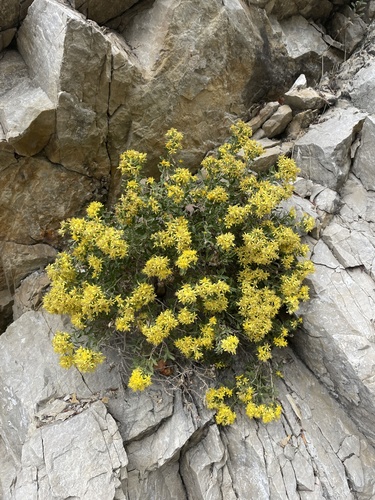
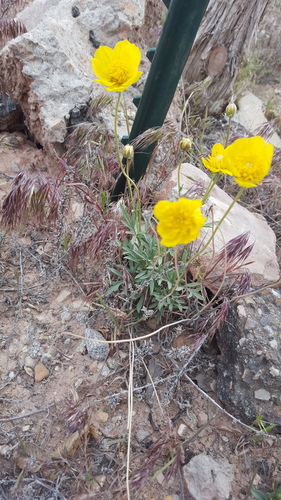
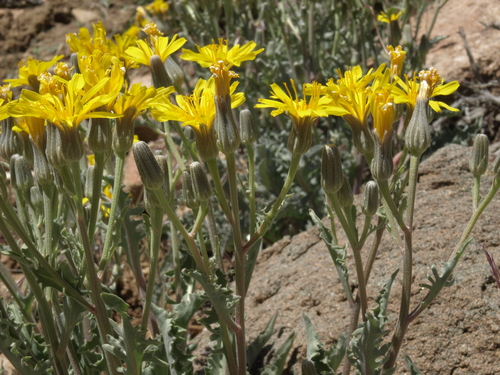
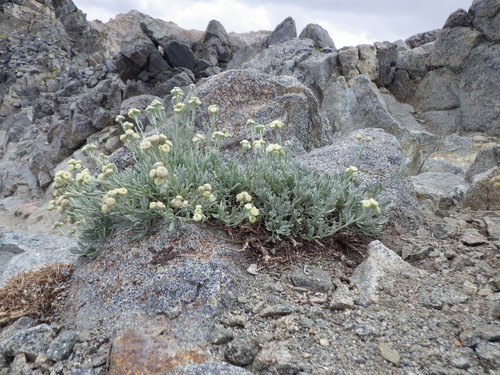
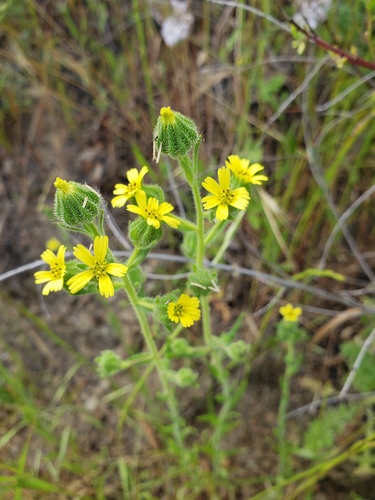
Madia gracilis is an annual herb with a branching stem that has a hairy, glandular texture. Its leaves reach up to 10 centimeters in length, and are covered in soft hairs and stalked resin glands. The inflorescence consists of an array of clustered flower heads. Each flower head is lined with phyllaries that are densely coated in stalked, knobby resin glands. The head produces yellow, lobe-tipped ray florets a few millimeters long, plus several disc florets with black anthers. The fruit is a flat, hairless achene that lacks a pappus. This species is native to western North America, with a range extending from British Columbia south through California to Baja California, and east to Utah and Montana. It grows in many habitat types, including oak woodlands and mixed evergreen forests, and does not grow in arid deserts. The seeds of Madia gracilis were used to make pinole by the indigenous Mendocino, Miwok, and Pomo peoples of California.