About Madhuca longifolia (J.Koenig ex L.) J.F.Macbr.
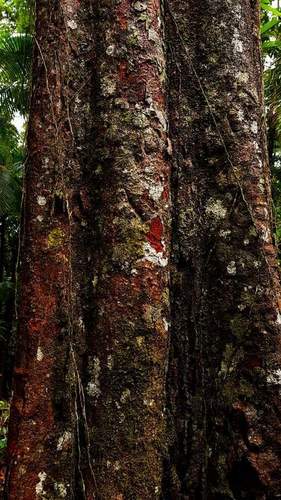
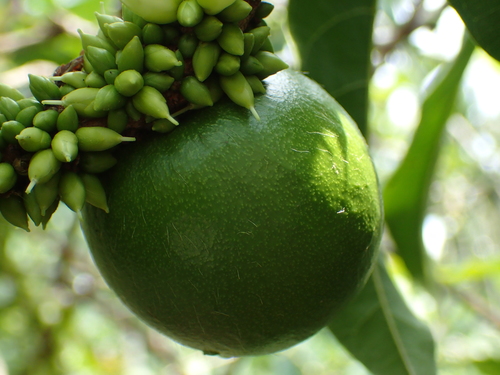
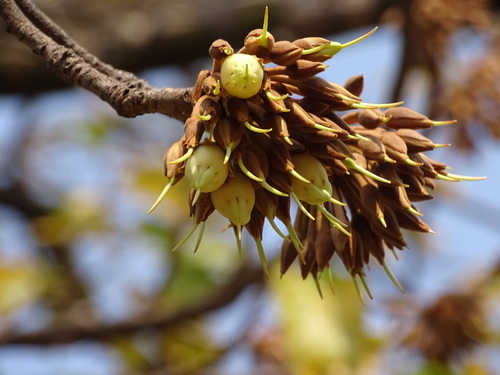
Madhuca longifolia (J.Koenig ex L.) J.F.Macbr. is a tropical tree native to India, where it grows largely in central, southern, and northern Indian plains and forests. It is also found in Bangladesh, Nepal, Myanmar, and Sri Lanka. It has many common names, including madhūka, mahura, madkam, mahuwa, Butter Tree, mahwa, mahua, mohulo, Iluppai, Mee, and Ippa-chettu. It is a fast-growing tree in the family Sapotaceae, reaching approximately 20 meters in height, with evergreen or semi-evergreen foliage. It can adapt to arid environments, and is a prominent tree in tropical mixed deciduous forests across the Indian states of Maharashtra, Odisha, Chhattisgarh, Jharkhand, Uttar Pradesh, Bihar, Andhra Pradesh, Madhya Pradesh, Kerala, Gujarat, West Bengal, and Tamil Nadu. This tree is cultivated in warm and humid regions for its oleaginous seeds, flowers, and wood. Individual trees produce between 20 and 200 kg of seeds per year, depending on maturity. The fat from its seeds is solid at ambient temperature, and is used as vegetable butter for skin care, and to manufacture soap or detergents. It can also be used as fuel oil. The seed cake left after oil extraction is an excellent fertilizer. The flowers are used to make an alcoholic drink in tropical India, and this drink is known to affect animals. Several parts of the tree, including bark, are used for their medicinal properties. Many tribal communities consider the tree holy for its usefulness. The leaves of what was formerly classified as Madhuca indica (now synonymized with M. longifolia) are eaten by the moth Antheraea paphia, which produces tassar silk, a commercially important form of wild silk in India. Leaves, flowers, and fruits are also collected by lopping to feed goats and sheep. Seed oil from synonymized Madhuca indica can be used to synthesize polymer resin. One research attempt used this oil to prepare alkyd-type polyurethane resins, which serve as a good source of anticorrosion organic coatings. Tamil communities call this tree iluppai, and have multiple uses for it. A Tamil saying, "aalai illaa oorukku iluppaip poo charkkarai", notes that the tree's very sweet flowers can be used as a sugar replacement when cane sugar is unavailable. However, Tamil tradition cautions that excessive use of this flower causes thinking imbalance and may even lead to lunacy. In some parts of India, alkaloids in the press cake of mahura seeds are reportedly used to kill fish in aquaculture ponds. After killing the fish, the cake fertilizes the pond; the pond can then be drained, sun dried, refilled with water, and restocked with fish fingerlings.