About Macaldenia palumba (Guenée, 1852)
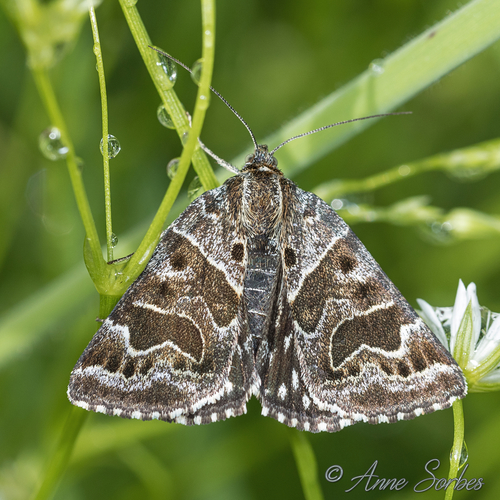
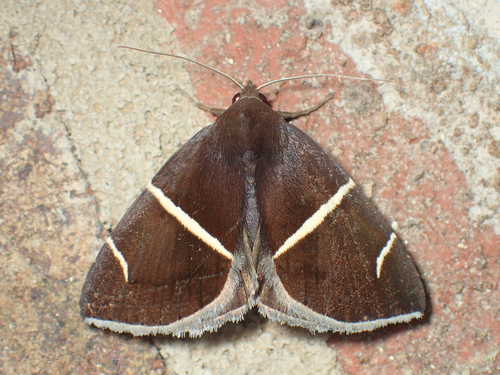
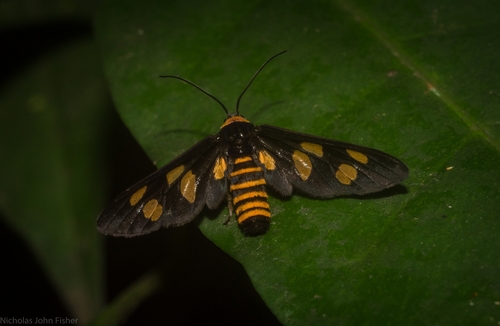
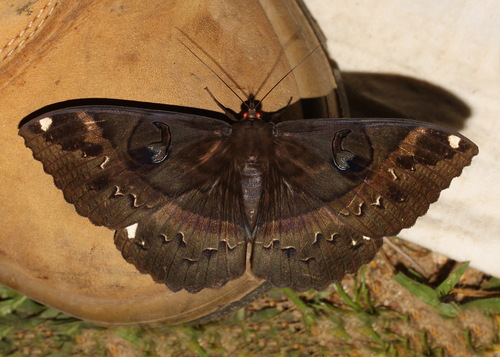
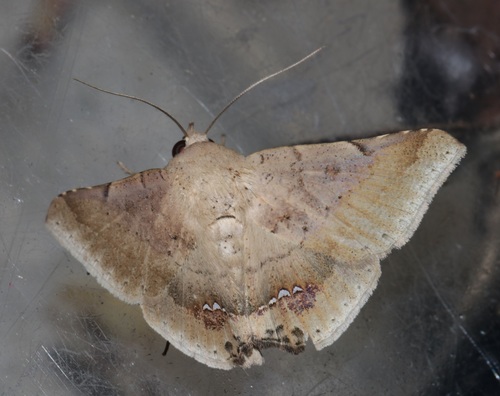
Macaldenia palumba (Guenée, 1852) has a wingspan of approximately 38–52 mm. Its body is generally brownish grey. The forewings are slightly suffused with purple and sprinkled with black, and have indistinct waved sub-basal and antemedial lines. There is a small, fuscous, obsolete reniform spot, and a postmedial line that is angled below the costa. Past this angle, the postmedial line is indistinct and crenulate, with a series of black specks on the nervules. A slightly sinuous brown submarginal line, which can be either indistinct or prominent, is present, and an almost marginal series of minute specks can be seen. Both the cilia and wing margin have grey coloring. The hindwings have an indistinct line and some fuscous postmedial suffusion, plus a series of small white lunules with ferrous suffusion beyond them toward the inner margin. There is grey coloring on the hindwing margin and cilia, and fuscous marks are visible toward the anal angle. The larva has its first pair of abdominal prolegs aborted, and two dorsal humps on the anal somite. The larval body is brownish ochreous on the upper side and olive on the underside, with some dorsal and lateral streaks speckled with black. A sub-lateral whitish line is present, with some pinkish spots above it. Known host plants for feeding larvae are Atalantia and Paramignya. While larvae have been reared on Citrofortunella in captivity, it remains unknown whether they feed on this plant in wild populations.