About Lysurus cruciatus (Lepr. & Mont.) Henn.
Lysurus cruciatus, commonly known as the lizard's-claw stinkhorn, is a fungus species belonging to the stinkhorn family. It was first scientifically described in 1845 by French botanists François Mathias René Leprieur and Camille Montagne, who classified it as Aserophallus cruciatus. German mycologist Paul Christoph Hennings moved it to the genus Lysurus in 1902. In 1901, this fungus was rediscovered in Inanda, Natal; the new discovery was named L. woodii, a name that was later corrected to the already published L. cruciatus.
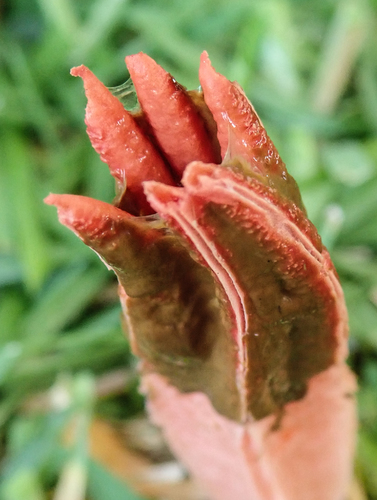
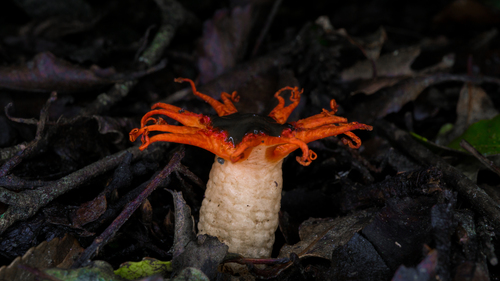
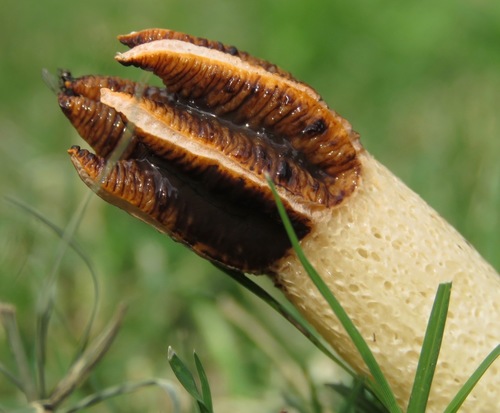
The fruit bodies of Lysurus cruciatus consist of a white cylindrical tube that supports a cluster of hollow, reddish, pointed arms. The surface of these arms is covered in a foul-smelling spore mass called gleba, which ranges in color from brownish to greenish. The spores of this fungus measure 3–4 by 1.5–2 μm. Mature fruiting bodies can reach up to 12 centimetres (4+3⁄4 inches) in height. This species may be edible when it is still in the 'egg' immature stage, but mycologist David Arora warns that the eggs share the same issue seen in Clathrus archeri eggs: they are surrounded by a mucilaginous spore layer that leaves a persistent unpleasant aftertaste.