About Lycium shawii Roem. & Schult.
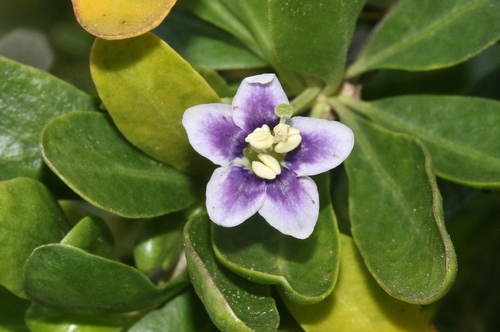
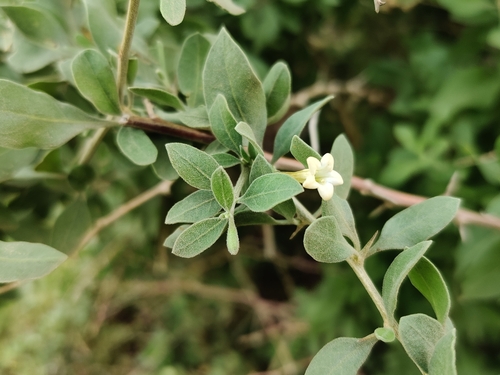
Lycium shawii, commonly known as desert thorn or Arabian boxthorn, is a species of thorny shrub adapted to desert environments. It can be found across the Arabian Peninsula and in locations throughout parts of Africa. This rigid, thin-leaved bush grows up to 3 metres (9.8 feet) tall, producing many branches with alternating spines of varying sizes that grow along the branches and at their tips. Its leaves narrow toward the base. From September through April, it bears small whitish-pink or purple flowers, followed by edible red, pea-sized, seedy berries. Its typical habitats include gravel plains, wadis, and foothills up to 1,200 m (4,000 ft). Common plant species that often grow nearby are Acacia tortilis and Prosopis cineraria. The stems, leaves, and berries of this species are used in traditional medicine. In Yemen, pounded leaves of this shrub have been used as a treatment for eye ailments. The berries have a laxative effect and have been used in traditional medicine to relieve constipation, as well as acting as a diuretic. Livestock feed on the new growth of this plant.