About Lycium intricatum Boiss.
Taxonomy and Common Names
Lycium intricatum, commonly referred to as the desert thorn or intricate boxthorn, is a flowering plant species within the Solanaceae family.
Native Range
It is indigenous to the arid regions of North Africa and southwestern Asia, including countries such as Iran and Saudi Arabia.
Growth Form
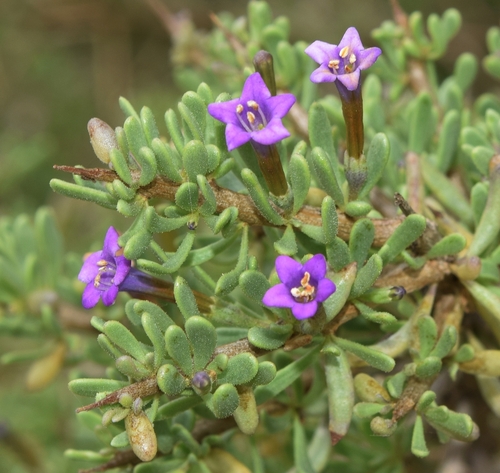
Typically, this plant grows as a shrub or small tree, reaching up to 3 meters in height, with spiny branches and small, oval-shaped leaves.
Flower Characteristics
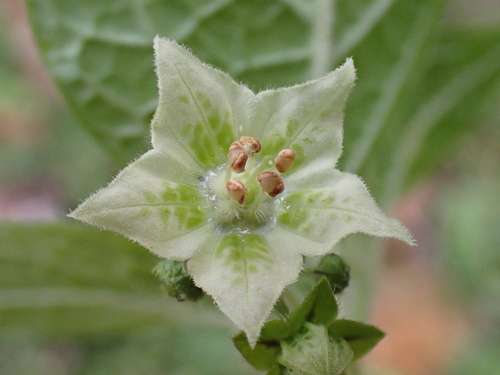
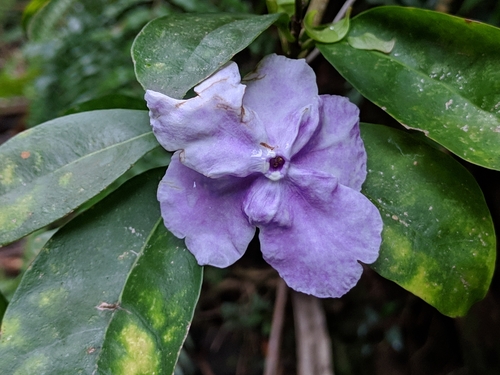
The flowers are small, white to pale purple, and feature five petals, blooming from late spring through early summer.
Fruit Characteristics
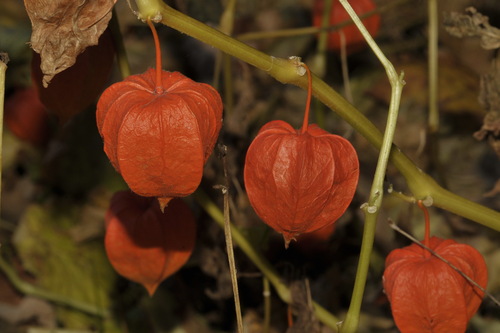
The plant produces red berries that contain numerous seeds.
Traditional Medicinal Uses
For centuries, Lycium intricatum has been utilized in traditional medicine for its various health benefits, including the treatment of fever, inflammation, liver problems, and the enhancement of eyesight.
Ornamental Value
Additionally, it is valued as an ornamental plant due to its attractive flowers and berries.
Preferred Growing Conditions
The plant thrives in hot climates with well-drained soil but can also tolerate some shade.
Propagation and Maintenance
It can be propagated through seeds or cuttings, although it requires regular pruning to maintain its shape.
Global Recognition Status
Despite its significance as a medicinal herb in many cultures around the world, Lycium intricatum remains relatively unknown outside its native range.
Current Research Interest
However, it has recently garnered attention due to ongoing research into its potential health benefits, such as antioxidant properties, which may help prevent chronic diseases like cancer or heart disease when consumed regularly over time.