About Lycium berlandieri Dunal
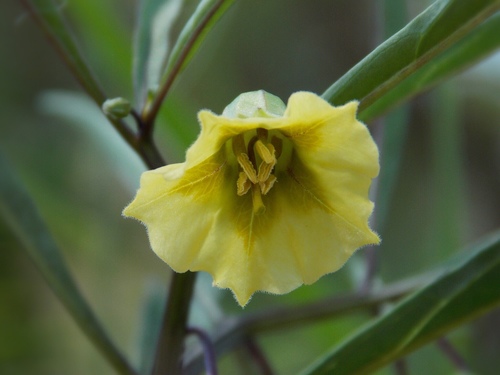
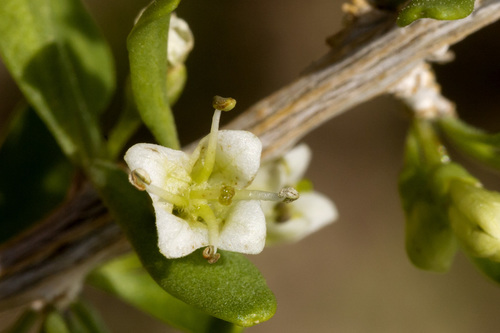
Lycium berlandieri, commonly known as Berlandier's wolfberry, is a flowering plant species belonging to the nightshade family. It is native to Mexico and the southwestern United States, ranging from Arizona to Texas. This spiny-branched shrub grows up to 2 metres (6 feet 7 inches) tall, with roots that may extend 9 metres (30 feet) out from the plant. It drops its leaves and enters dormancy during dry periods. Its bell-shaped flowers grow either singly or in pairs, and it produces a juicy red berry as fruit. The average lifespan of this plant is 90 years. It is a characteristic component of the flora of the Sonoran and Chihuahuan Deserts. It is rarely a dominant species, but grows in many types of desert habitat, including mesquite and saltbush plant communities, creosote scrub, grassland, prairie, and savanna. It can grow on desert salt flats and other saline habitats. It may invade grassland alongside mesquite during ecological succession. In the Sonoran and Chihuahuan Deserts, it grows alongside ocotillo (Fouquieria splendens), saguaro (Carnegiea gigantea), range ratany (Krameria parvifolia), ironwood (Olneya tesota), jojoba (Simmondsia chinensis), false-mesquite (Calliandra eriophylla), brittlebush (Encelia farinosa), leatherstem (Jatropha cardiophylla), feather dalea (Dalea formosa), yucca, agave, Opuntia cacti, and acacia species. In Texas, it can be found in sandy arroyos and more saline areas growing alongside mesquite and hackberry. Many birds and rodents eat the fruits of this shrub. Gambel's quail live in habitats where this shrub is common, and use it for cover and nesting. Native Americans consumed the plant's fruits and used the plant for medicinal purposes.