About Lycium andersonii A.Gray
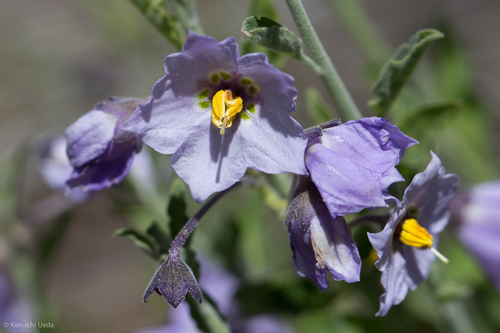
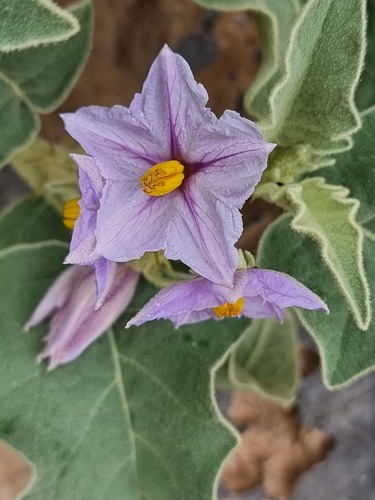
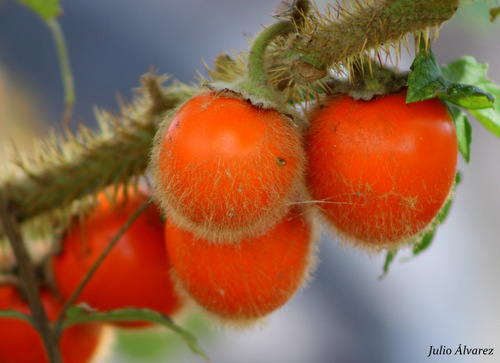
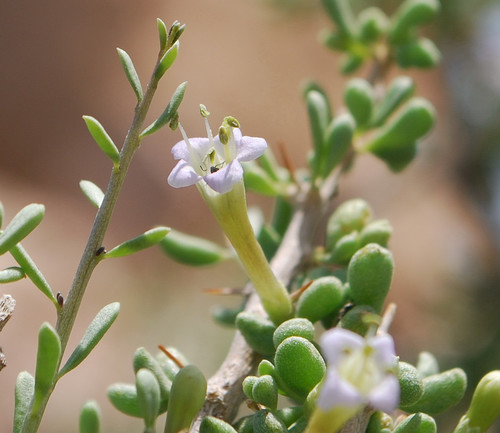
Lycium andersonii A.Gray is a species of flowering plant in the nightshade family, Solanaceae. Its common names are water-jacket, redberry desert-thorn, Anderson thornbush, Anderson's desert thorn, Anderson boxthorn, Anderson lycium, Anderson wolfberry, and squawberry. This species is native to the Southwestern United States and northwestern Mexico, and is distributed across New Mexico, Arizona, California, Nevada, Utah, Baja California, Sinaloa, and Sonora. It grows in many habitat types and plant communities, including pinyon-juniper woodland, creosote bush scrub, sagebrush scrub, chaparral, and coastal sage scrub. This plant is a shrub that reaches a maximum height of around 2.7 metres, or 8 feet 10 inches. It grows from a large, fibrous root system that can extend over 9 metres, 30 feet, from the plant's base. The shrub has a rounded shape, with many branches covered in thin spines that grow up to 2 centimetres, 0.79 inches, long. Its flat leaves are thick and fleshy, and measure up to 1.7 centimetres, 0.67 inches, long; the plant sheds these leaves during dry conditions. Its flowers have funnel-shaped white or purple-tinged corollas up to one centimeter long. The fruit is a red or orange berry less than one centimeter long. This plant grows in sandy, gravelly washes, as well as on slopes and mesas. It can tolerate some soil salinity and alkaline soils such as caliche, and it thrives in hot, dry climates. It is rarely the dominant species in local flora. Its common associated plant species include creosote bush (Larrea tridentata), yellow palo verde (Parkinsonia microphylla), white bursage (Ambrosia dumosa), smoke tree (Psorothamnus spinosus), Nevada ephedra (Ephedra nevadensis), hop sage (Grayia spinosa), pale wolfberry (Lycium pallidum), blackbrush (Coleogyne ramosissima), singlewhorl burrobrush (Hymenoclea monogyra), and Joshua tree (Yucca brevifolia). It was named for Charles Lewis Anderson by Asa Gray.