About Lycaena feredayi (Bates, 1867)
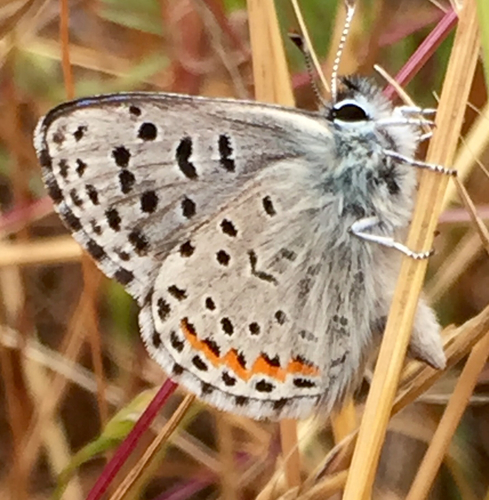
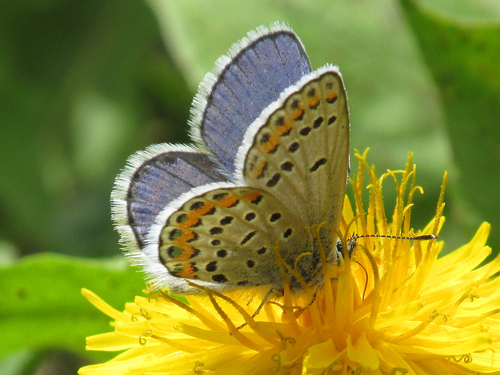
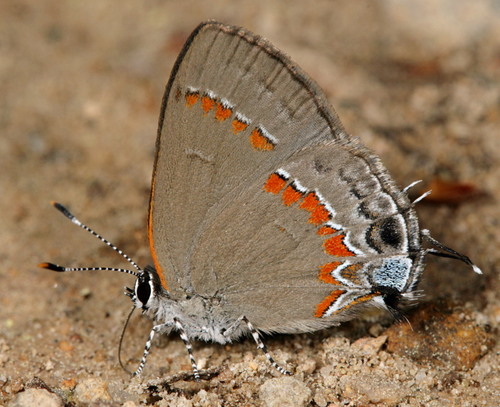
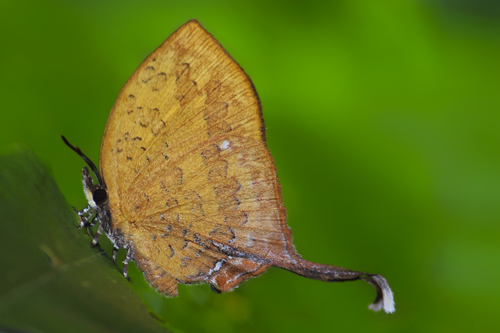
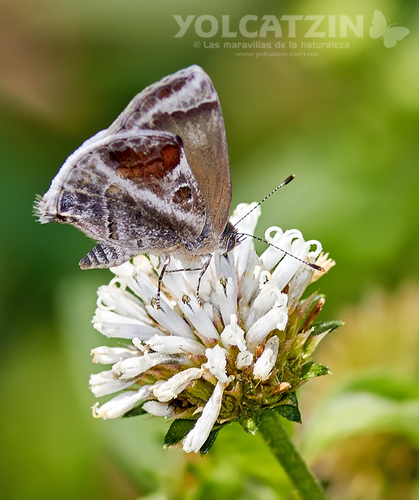
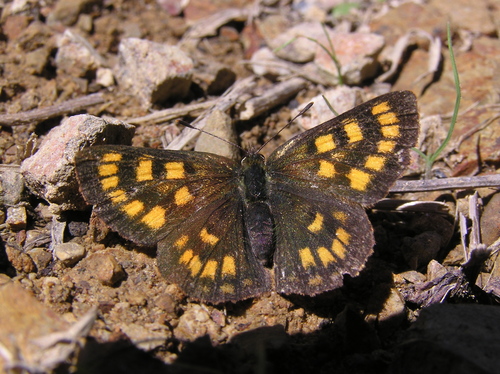
Lycaena feredayi, commonly known as the glade copper butterfly, has wings that are primarily orange with black outlines and lines, plus coloured wing edges and striped antennae. There is no noticeable external physical difference between male and female individuals of this species; the sexes can only be differentiated by the shape of the abdomen when observed in the field (Flux, 2012). While young glade coppers look identical to young coppers of other species, this species’ wing patterns and colouring remain fairly consistent with very little variation, unlike other copper butterfly species (Gibbs 1980). This butterfly is endemic to New Zealand, meaning it is not naturally found anywhere else in the world. In New Zealand, as their common name suggests, glade coppers usually inhabit forest glades, along waterways and gullies across the North and South Islands (Hudson 1928, Gibbs 1961). Observed populations have been recorded across most of the South Island and in specific parts of the North Island: the eastern side of the Dunstan Mountains, Central Otago, and Wellington (Craw 1974). Glade coppers appear less common than their actual natural abundance due to losses of their larval host plants. They can be found in any location where their larval host plant grows, in addition to forest glades (Gibbs 1961, Flux 1968). This is a sedentary species with a small home range, and individuals never travel far from their larval food plant (Craw 1975). Like all butterflies, glade coppers go through four distinct life cycle stages, each with different physical traits, transformations, and life functions. The first stage is the ovum (egg), which is laid on the underside of food plant leaves in a process called oviposition (Gibbs 1961, Craw 1974). Females walk along plant stems and oviposit on old leaves, 5–10 cm away from young growth. Eggs are always laid in the centre of the leaf, between 0.5 and 6 mm from the leaf edge. Females are usually observed laying one egg per leaf, though multiple eggs may sometimes be found on a single leaf when several females have each laid one egg there. When larvae first hatch from eggs, they are yellow-green. After they begin feeding, they become leaf-green with small white spots and reddish hairs, and have a reddish-brown mid-dorsal line. The only confirmed recorded larval food plant for this species is pohuehue, and it is considered highly likely that larvae also feed on other pohuehue species. Larvae develop over about 6 weeks through four instars, or moulting stages. From the first to third instar, larvae chew small round holes into the undersides of leaves; in the fourth and final larval instar, they feed on leaf margins (Cowley 1983). The pupal stage is the next and final stage before adulthood, in which individuals are reddish brown with greenish brown wing cases and a pale brown eye. Pupae hide inside a silk-held leaf tent that forms a cocoon. Their bodies are covered in stiff hairs that give them a rough texture. Pupation occurs when the individual attaches itself to the food plant via its cremaster, the hind part it uses to hang from the plant. This stage lasts roughly 17 days, and may sometimes be longer. Pupae are hard to find in the wild. The final life stage is the imago, also called the adult flying stage. Unlike other adult copper butterflies, adult glade coppers have much heavier, darker wing markings. Their wingspan ranges from 25 to 32 mm (Cowley 1983). There is still no external form difference between adult genders; the only physical distinction is abdomen shape: males have long, narrow abdomens, while females have short, swollen abdomens. The estimated average adult life expectancy is 7 days (Craw 1975). When courting females for mating, male glade coppers flutter much more rapidly in multiple directions, and stop frequently. No detailed studies or observations of this species’ courtship behaviour have been recorded to date. Interspecific interactions with other copper butterfly species have been observed to act as a mechanism that helps this species maintain its habitat selection (Craw 1974).