About Lupinus mutabilis Sweet
Scientific name: Lupinus mutabilis Sweet.
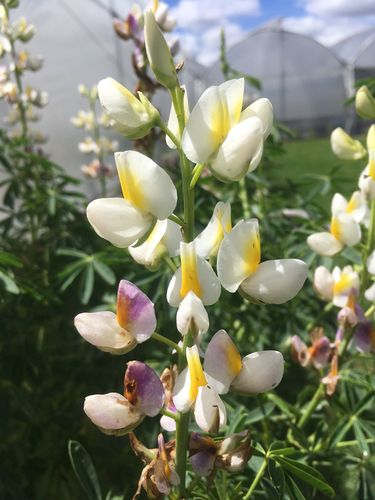
Morphology: The fruit of this plant is a pod that measures 5 to 12 cm (2–5 in) long, with length depending on the number of seeds it contains. On average, one pod holds 2 to 3 seeds, though individual pods can have as many as 9 seeds. The thousand-seed weight (TSW) is approximately 200 g. Leaves are palmate, with each leaf divided into 5 to 12 oval or lanceolate leaflets. This leaf structure is typical for Faboideae. The corolla measures 1 to 2 cm (3⁄8–3⁄4 in) and is made up of five petals. Flower corolla color varies widely, ranging from white to purple, and white flower color is genetically recessive to purple. L. mutabilis has a strong taproot that can reach 3 metres (3 yd) in length. Like all Leguminosae, its secondary roots develop nodules that contain bacteria for nitrogen fixation.
Cultivation technique
Sowing: In traditional farming, minimum tillage is carried out before sowing, and 100 to 120 kg of unselected seeds per hectare (89–107 lb/acre) are sown. Improved cultivation methods recommend applying 80 kg (180 lb) of phosphorus and 60 kg (130 lb) of potassium as fertilizer before sowing. After fertilization, 90 kg (200 lb) of selected seeds are sown with 60 to 80 cm (24–31 in) spacing between plants, either by hand or using a seed drill. Seeds germinate quickly thanks to their high fat content.
Crop rotation aspects: Early varieties of L. mutabilis have a growing period of around 150 days, and can be grown in rotation with potatoes and cereals. When potatoes are grown after L. mutabilis, the plant’s alkaloids help control potato nematode disease.
Harvest: In traditional farming, harvest takes place when plants have reached full maturity and seed water content is between 8 and 12%. Average yields from small peasant plots are around 500 to 1,000 kg (1,100–2,200 lb) per hectare, and yields can reach up to 3,500 kg (7,700 lb) per hectare under suitable growing conditions.
Disease control: While alkaloids can act as pesticides, modern breeding goals for this crop focus on producing low alkaloid content, so other disease control methods are required. As L. mutabilis is typically grown as a low-input crop, disease control relies mainly on phytosanitary practices. Removing dry straw from fields reduces populations of soil-borne saprophytes. Plant residues can be used as fuel instead of being turned into green manure. Seed-borne diseases can be reduced by relocating seed production areas and using certified seed. If growers produce their own seed, diseases can be managed by removing infected seeds and maintaining ongoing field disease monitoring and control. Another option is to treat seeds with a fungicide before sowing.