About Lupinus latifolius Lindl. ex J.Agardh
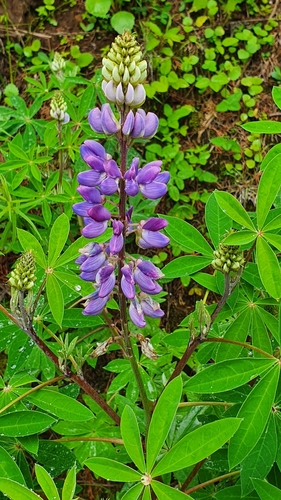
Lupinus latifolius Lindl. ex J.Agardh, a lupine species, is commonly known as broadleaf lupine. It is native to western North America, ranging from British Columbia south to Baja California and east to New Mexico, where it is common and occurs in multiple habitat types. This species includes multiple subtaxa, which are classified as either subspecies or varieties; some of these subtaxa are common, while others are rare, and they differ in morphological characteristics. Overall, broadleaf lupine is an erect perennial herb. It grows between 30 centimeters and over two meters tall, and its texture ranges from hairy to nearly hairless. Each leaf is palmate, formed from several leaflets; on larger plants, individual leaflets can reach up to 10 centimeters in length. The inflorescence holds many flowers, which are sometimes arranged in whorls. Each flower measures 1 to 2 centimeters long, and its color ranges from purple to blue to white; the spot on the flower's banner is yellowish, pinkish, or white. One rare subtaxon, Lupinus latifolius var. barbatus, is endemic only to the Modoc Plateau of northeastern California and the adjacent border areas of Oregon and Nevada. The subtaxon dudleyi is known to occur only in the San Francisco Bay Area. This plant acts as a larval host for five butterfly species: Boisduval's blue, clouded sulphur, orange sulphur, Persius duskywing, and silvery blue.