About Lupinus bicolor Lindl.
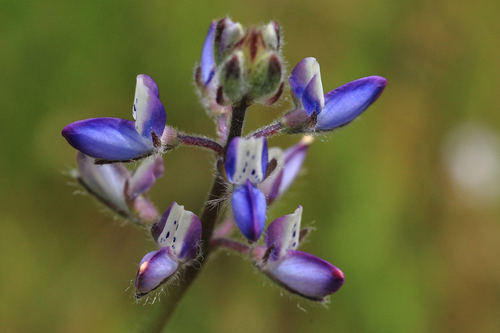
Lupinus bicolor Lindl. has a short, hairy stem and thin leaves arranged in a palmate pattern. Its inflorescence is short for a lupine, reaching a maximum height of 8 centimetres (3.1 inches). As the species name bicolor suggests, its flowers are typically two-colored: one shade is often a deep blue, while the other is most often white, and sometimes light purple or magenta. Small speckles or spots may sometimes appear on the petals. The plant produces small, hairy, very thin seed pods only a couple of centimeters long, which contain tiny brownish pea-shaped seeds. This species is cultivated as an ornamental plant, grown from seed in native plant gardens, drought-tolerant gardens, wildlife gardens, natural landscaping projects, and habitat restoration projects. It provides value to pollinators, including native bees and bumble bees. At a local spatial scale, Lupinus bicolor was found to increase the abundance of the native Yellow-faced bumble bee (Bombus vosnesenskii) at restoration sites in Santa Barbara, California.