About Lupinus argenteus Pursh
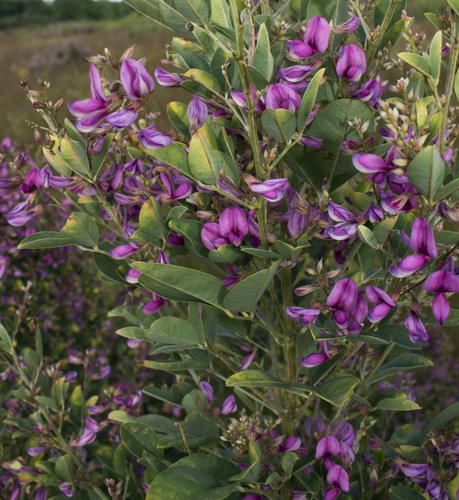
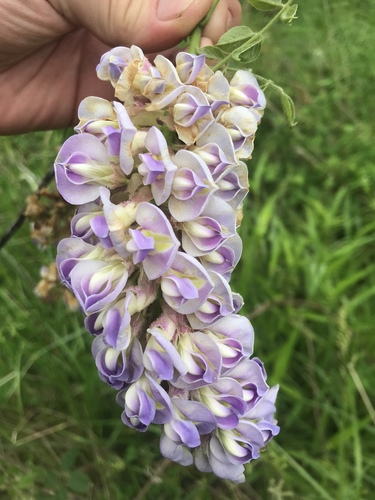
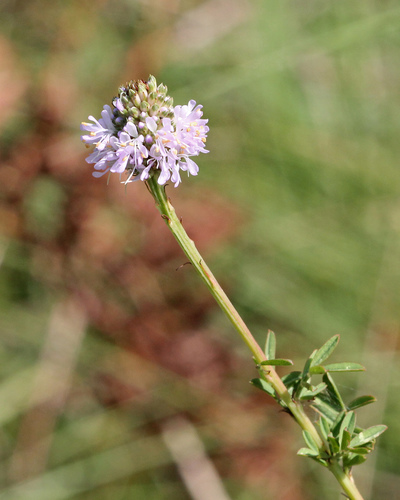
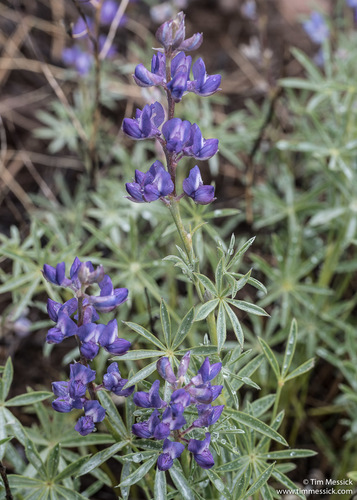
Lupinus argenteus Pursh, commonly known as silver lupine or silvery lupine, is a perennial herbaceous plant. It produces one or more stems that usually grow 15 to 70 centimeters (0.5 to 2.3 ft) tall, though stems may occasionally reach as short as 10 cm (4 in) or as tall as 1.2 m (3 ft 11 in). Stems branch near their tips or grow short spurs, and range in color from green to faintly purple. All stems are covered in hairs that are either puberulent (fine, short, and erect) or strigose (straight, all pointing the same direction). Stems emerge from a root crown located at or just below the soil surface. Most leaves are cauline, meaning they attach directly to the plant’s stems. Leaf color can be green, ashy, or almost white (canescent), depending on whether the upper leaf surface is hairless or covered in hairs. Each leaf is palmate, with 6 to 9 leaflets radiating from a central attachment point, and connects to the stem via a 1.5–8 cm long petiole. Flowers are arranged in racemes that measure 4 to 30 centimeters (1.6 to 11.8 in) long, most commonly between 5 and 25 cm (2 to 10 in). These inflorescences may grow solitary at the end of a stem, form one large main raceme at the stem tip with smaller racemes branching off below, or consist of several racemes of nearly equal size. Flowers are typically blue-purple, but may occasionally be lavender, pink, or white. All flowers have a white or yellow spot on the uppermost banner petal, which changes to red-purple as the flower ages. The fruit is a densely hairy legume pod, measuring 2–3 cm long by 0.6–0.9 cm wide, that contains 2 to 6 seeds. Silver lupine grows across much of the western United States, parts of western Canada, and two Mexican states. In Canada, it occurs in the provinces of British Columbia, Alberta, and Saskatchewan. In the Pacific Northwest, it is native to eastern Washington and eastern Oregon, as well as nearly all of Idaho. To the east, it grows throughout the Rocky Mountains in Montana and Wyoming, and extends onto the Northern Great Plains as far east as western North Dakota and South Dakota. Further south, it occurs mostly in the Nebraska panhandle and all but the far eastern portion of Colorado. It is possibly native to Kansas, but no specific location data exists for these records, and it is not listed as present in Kansas in the Flora of the Great Plains. In Mexico, it grows in the northwestern states of Chihuahua and Sonora. It can be found in a very wide range of plant communities, including ephedra stands, grasslands, sagebrush steppes, piñon-juniper woodlands, ponderosa pine forests, aspen groves, and spruce-fir communities. Many species of butterfly use silvery lupine as a caterpillar food source, including the arrowhead blue (Glaucopsyche piasus), gray hairstreak (Strymon melinus), lupine blue (Icaricia icarioides), and silvery blue (Glaucopsyche lygdamus). It also serves as an alternate food plant for caterpillars of the hops azure butterfly (Celastrina humulus).