About Lupinus arcticus S.Watson
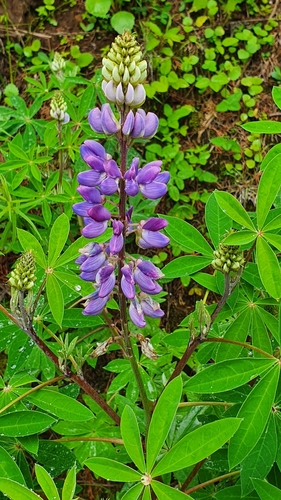
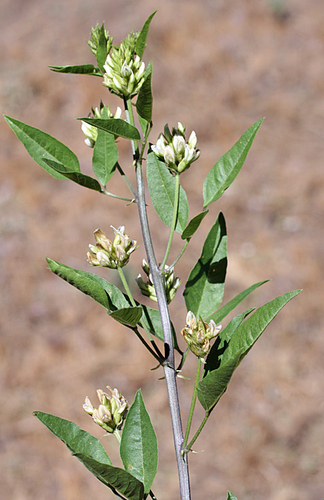
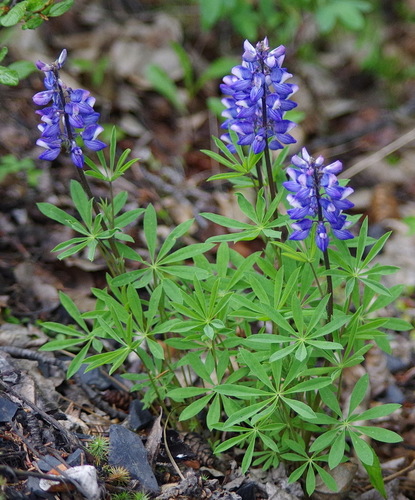
Lupinus arcticus S.Watson is a species of flowering plant in the subfamily Faboideae of the legume family Fabaceae, with the common names Arctic lupine or subalpine lupine. It is native to northwestern North America, occurring from Oregon north to Alaska and east to Nunavut, and it is a common wildflower in British Columbia. This is a perennial herb that grows from a taproot, and produces erect stems that reach up to 50 centimeters in height. Its dark green, hairy leaves grow on rough, hairy petioles that can be up to 17 centimeters long. The leaves are palmately compound, each made up of 3 to 9 leaflets that measure up to 6 centimeters long. The flowering structure is a raceme inflorescence up to 15 centimeters long, which holds up to 30 flowers. The flowers are most often blue, sometimes purple, and occasionally white. The upper banner petal of these pealike flowers may have a pink tinge. The fruit is a hairy legume pod that ranges from greenish to blackish in color, and is 2 to 3 centimeters long. The pod holds up to 10 black seeds with white speckles, each about half a centimeter long. When it grows alongside other lupine species, Lupinus arcticus may hybridize with them. This plant grows in multiple habitat types, including sedge and moss fields, alpine regions, and the hills of the Canadian Arctic Archipelago. It also grows on tundra and in moist and wet substrates. This species has been the subject of biological research. In 1967, seeds of this species were found in ancient lemming burrows dating to the Pleistocene; the seeds germinated into mature plants, leading to the claim that these were the oldest viable seeds ever discovered. In 2009, a follow-up publication reported that radiocarbon dating confirmed the seeds were only a few years old when they were discovered, and had likely entered the burrows shortly before being found. Lupinus arcticus contains a neurotoxin called sparteine, which may act to deter herbivores such as the snowshoe hare. The concentration of sparteine in the plant's leaves follows a cycle, reaching higher levels at night when herbivory is more likely to happen. Besides snowshoe hares, species of ground squirrels are known to feed on this plant.