About Luperina dumerilii Duponchel, 1826
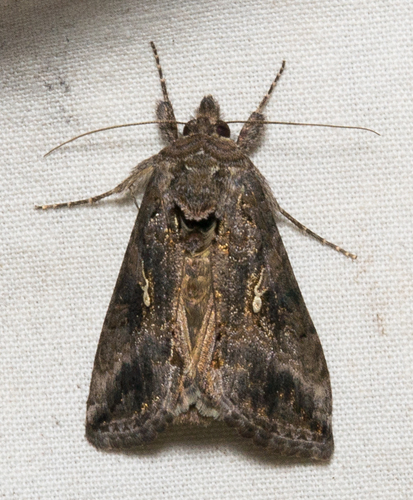
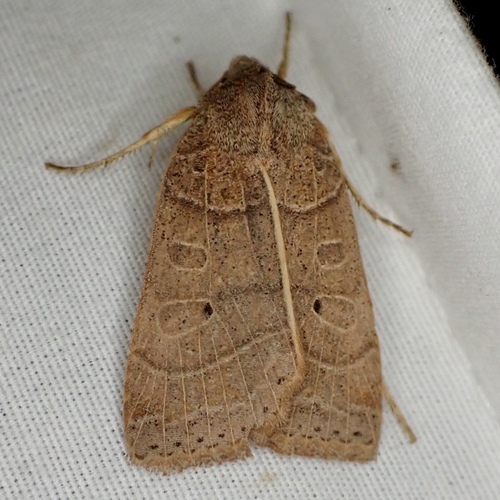
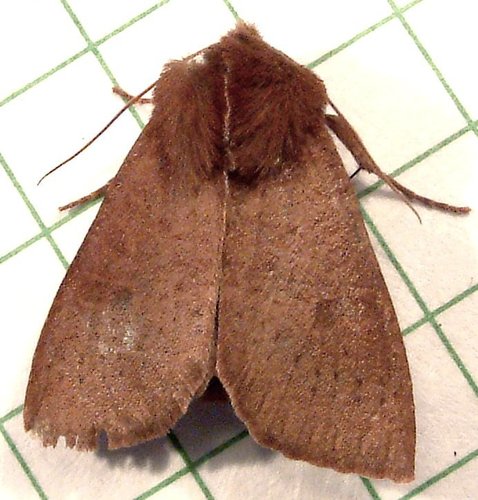
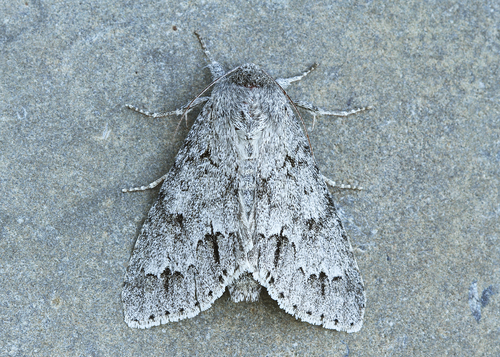
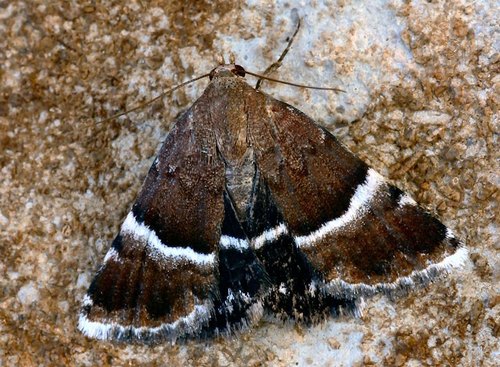
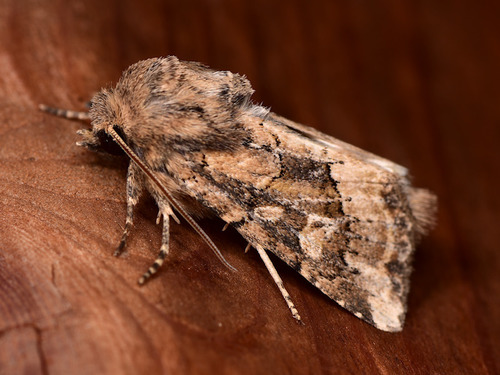
Technical description and variation of Luperina dumerilii Duponchel (also known as amentata Germ.) (43 d): Forewings are whitish ochreous, most often with a pinkish or rufous tinge; the median and terminal areas, a costal patch before the submarginal line, and generally the basal area are olive brown. The inner and outer lines are double, dark, and filled in with ochreous. The median vein and veinlets are whitish; the claviform stigma is minute, brown edged, or absent entirely. The orbicular and reniform stigmas are filled in with whitish, and have pale brown centres. The space between the outer and submarginal lines is of the pale ground colour, or slightly tinged with olive brown. The submarginal line is indicated by the dark terminal area, and generally also preceded by a pale brown line. The fringe is chequered, alternating brown and pale. The hindwing is white, tinged with grey in dark females.
The form ab. sancta Stgr. (43 d), found in Palestine and Sicily, is smaller and darker, with the upper stigmata snow white; the hindwing has a dark cellspot on the underside. A female from Ficuzza, Sicily certainly belongs to this form.
The form ab. diversa Stgr., now recognized as the full species Luperina diversa (Staudinger, [1892]) (43 d), from Asia Minor and Armenia, is paler, somewhat larger, and has more diffuse markings.
The form ab. uniformis ab. nov. (= ab. A. Guen., desyllesi Stgr. nec Bsd.) (43 d) is wholly brownish fuscous; the lines are barely visible except at the costa; all three stigmata are edged with black; the two upper stigmata have pale annuli. The hindwing is white, with a dark cellspot on the underside, matching the pattern seen in sancta Guen. Guenee's specimen originated from Lyons; the male specimen described in this entry is from Ficuzza, Sicily. The wingspan of this species ranges from 29 to 36 mm.