About Ludwigia decurrens Walter
Taxonomy and Common Names
Ludwigia decurrens Walter is a species of flowering plant in the evening primrose family, known by the common names willow primrose and wingleaf primrose-willow.
Native Range
It is native to the central and eastern United States.
Growth Form and Size
This species is an annual herb that grows up to 1.8 meters (6 feet) tall, and sometimes it grows as a perennial because its stem is partially woody. It has an erect growth form, with an angled, winged stem.
Surface Texture
The entire plant is glabrous, meaning it has no hairs.
Leaf Arrangement
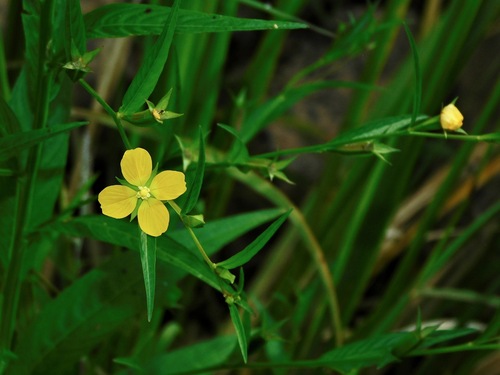
Its linear leaves are arranged alternately along the stem.
Leaf Morphology
The stalkless (sessile) leaves are decurrent: their leaf bases extend down along the length of the stem.
Flower Characteristics
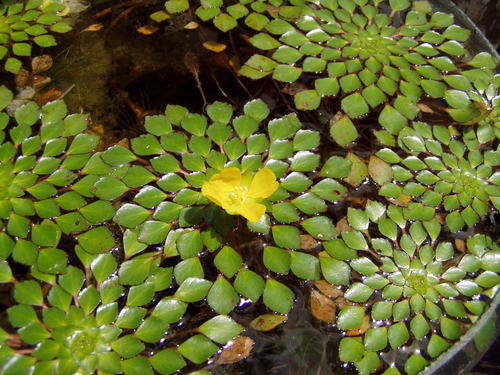
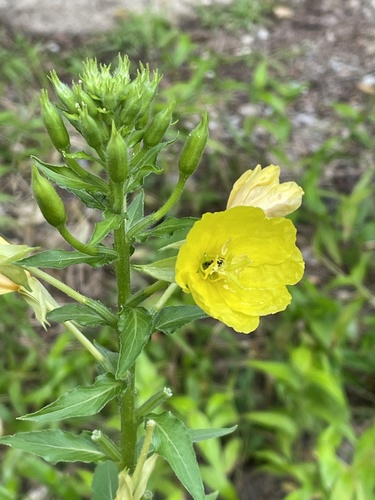
Each flower has four yellow petals.
Seed Production
The seed capsules of this species can hold up to 1000 seeds per capsule.
Native Habitat and Associated Genera
It grows in wet habitat types, and often grows alongside species from the Polygonum and Cyperus genera.
Introduced Invasive Range
Ludwigia decurrens has become an invasive species in Africa and Southeast Asia, where it frequently colonizes rice paddies and other wetlands.
Invasion Adaptations
Its ability to invade anaerobic habitats is aided by aerenchyma tissue that allows the rhizomes of willow primrose to float, as well as its capacity to spread by either seed or vegetative propagation from broken plant fragments.
Allelopathic Effects
Exudates produced by this species have been shown to have allelopathic effects on Corchorus olitorius, by increasing the mortality of its seedlings.