About Loscopia scolopacina (Esper, 1788)
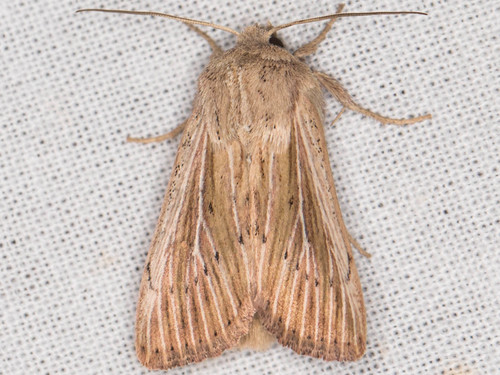
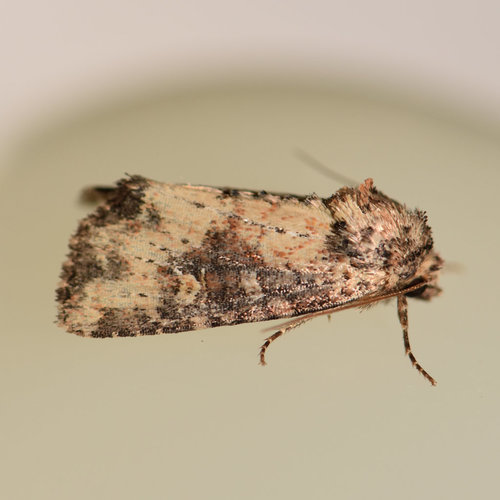
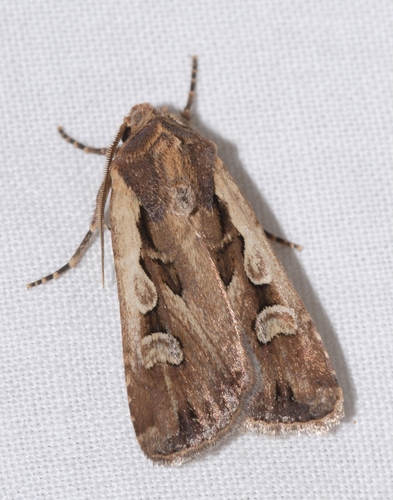
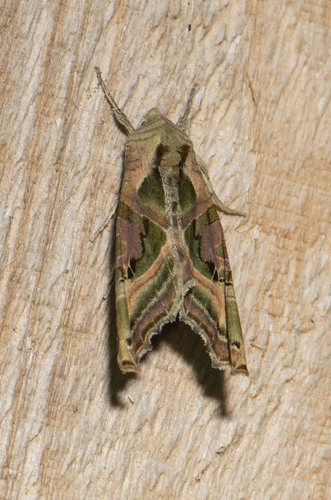
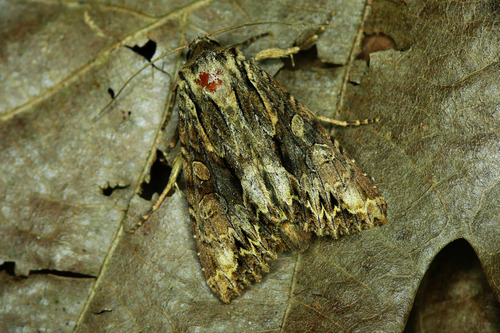
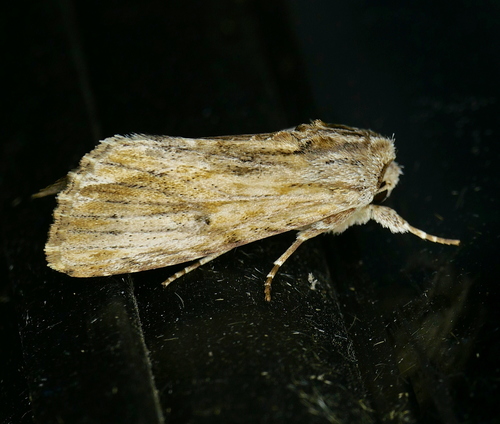
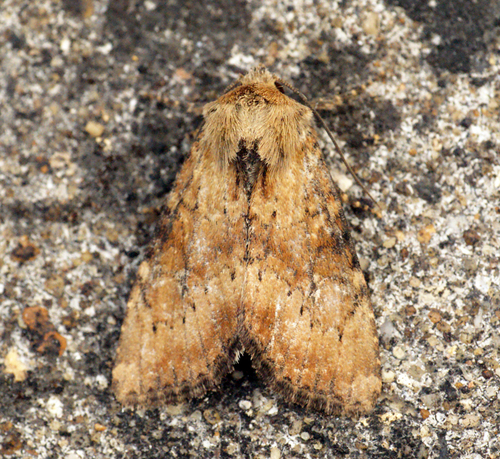
Apamea scolopacina, commonly known as the slender brindle, is a moth species in the family Noctuidae. It was originally described by Eugenius Johann Christoph Esper in 1788 under the scientific name Loscopia scolopacina. This species is distributed across the Palearctic realm, ranging from central Europe to the Kuril Islands, which lie northeast of Japan. Its wingspan measures 32 to 36 mm. The forewings are pale ochreous, usually tinted with pale brown. A black-brown streak runs along the inner margin before the inner line. The inner and outer lines are fine, double, conversely lunulate, and edentate on the veins. A dark brown or pale brown median shade is present, which, along with the inner line, enlarges into a cloud on the costa. The orbicular stigma is pale with brown edges; the reniform stigma has a brown lunular center and a white annulus, and is constricted at its middle. The terminal area is brown, and is crossed close to the termen by a paler subterminal line that forms a pale spot at the apex. The fringe is mottled with brown and ochreous. The hindwings are ochreous, washed with grey or fuscous. Several named variations exist. In the aberration abbreviata Haw., the ground color is pale ochreous with no brownish suffusion. In aberration hammoniensis Sauber, the dark costal and terminal areas are more intense, and the whole wing is suffused with greyish fuscous. The Japanese form, aberration subbrunnea ab. nov. Warren, has the entire wing washed with pale brown; the oblique bar near the base of the inner margin is either brown or obsolete; the dark costal blotches and brown terminal area are pale brown; all lines are obscured, with the only clear marking being the whitish reniform. Its hindwings are pale grey or brownish grey, with a dark cellspot and an outer line. Across all forms, males are consistently slightly darker than females. Depending on location, adult moths are on the wing from July to August. This species inhabits woodlands. Its larvae feed on grasses from genera including Milium, Deschampsia, and Briza, sedges from genus Scirpus, and rushes from genus Luzula.