About Lophotriorchis kienerii (Sparre, 1835)
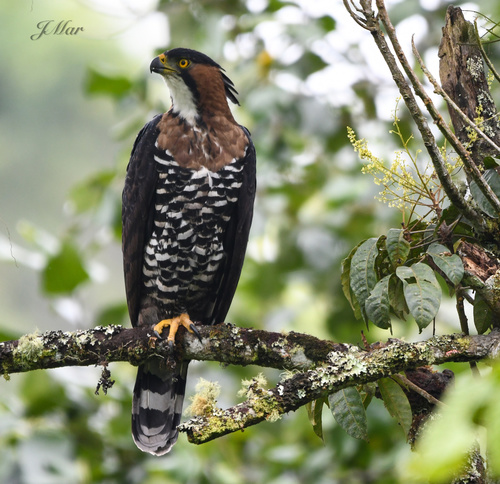
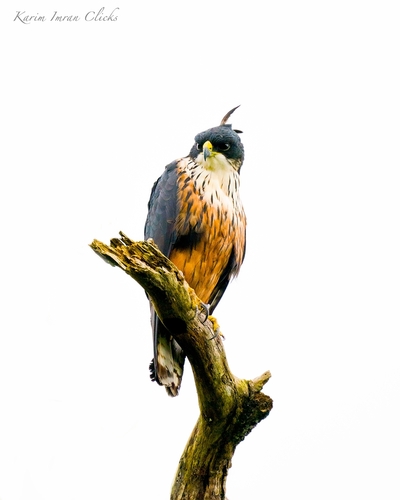
Adult rufous-bellied eagles (Lophotriorchis kienerii) have a distinct plumage pattern: they have a black hood with a short crest, chestnut underparts and wing coverts that contrast with white throat and breast. The plumage of males and females is almost indistinguishable, though females are slightly larger and have more black on the face. When perched, they hold a very upright stance, with wingtips that almost reach the tail, and their tarsus is fully feathered.
Juveniles have very white underparts, with dark markings on the sides of the body, head mask, and edge of underwing coverts. They can look similar to booted eagles (Aquila pennata). When in flight, the underwing lining is dark, the greater coverts are black, flight feathers are thinly barred with a black edge, and the dark tail is also barred.
This species is distributed across southern and south-eastern Asia, with its range extending to Sulawesi. It is mainly associated with hill forests. In India, it is more common in the Western Ghats than in the Himalayas, where it occurs from Nepal to Assam. It can also be found in parts of the Eastern Ghats.
Rufous-bellied eagles are most often seen soaring high in flight over forest canopies. They dive to capture prey, which includes birds and mammals found in the air, on the canopy, or on the forest floor. Recorded prey includes birds as large as Sri Lanka wood pigeons, kalij pheasants, and junglefowl.
Their breeding season takes place in winter, with young fledging in spring when prey species are also breeding. Their courtship display flight includes stooping and wing-quivering. Their calls are a series of high-pitched fwick, fwick... notes followed by a thin sweek!. They build their large stick platform nest on a large, often bare tree, using dry sticks and branches they break themselves. The nest is lined with green leaves, and a single egg is laid per clutch. Both parents share duties of incubation, feeding young, and defending the nest.