About Lophomyrtus obcordata (Raoul) Burret
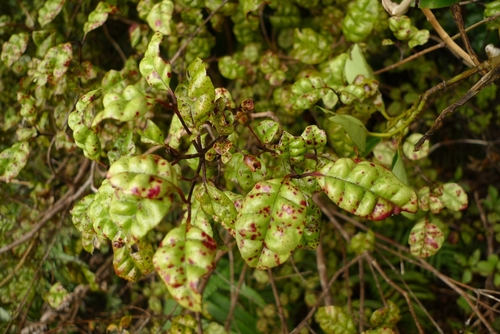
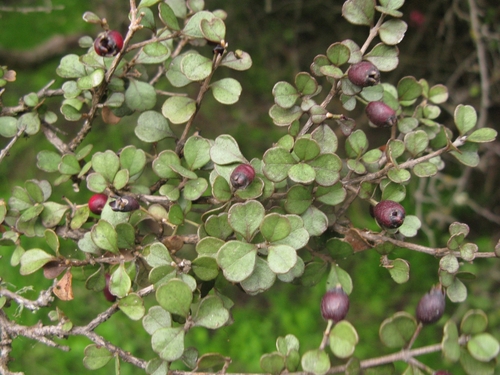
Lophomyrtus obcordata (Raoul) Burret, commonly known by its Māori names rōhutu or tutuhi, is a flowering plant species in the family Myrtaceae. It is endemic to New Zealand and most often found in lowland forest. The genus name Lophomyrtus derives from ancient Greek words: lóphos meaning crest (referring to bunches), and Myrtus meaning myrtle tree. The specific epithet obcordata refers to its heart-shaped leaves, which attach to the peduncle by their pointed end. Lophomyrtus obcordata is endemic to New Zealand globally. The entire genus Lophomyrtus is endemic to New Zealand, and it was formerly classified as part of the genus Myrtus, a genus that occurs mainly in South America. Within New Zealand, this species can be found on both the North and South Islands, and it occurs mainly on the South Island. It grows well in coastal forests at low altitudes, such as the forests of Westland, where the rich deep soils and warm temperatures support its growth; it is also rather tolerant to drought. It is most commonly found in coastal and lowland forests, but also occurs in montane forests. Occasionally, it can be found in the alluvial forests of the eastern South Island. This shrub grows in forest understories and in rocky habitats. Flowering and dispersal timing for this species varies by region. Flowering generally occurs from December to March, and can occur later depending on local climate; for example, flowering on Banks Peninsula occurs earlier, from December to January. Fruiting occurs from January to May. No information is currently known about this species' germination. The lack of available information on the phenology of Lophomyrtus obcordata makes conservation work for this species difficult. This species is diploid, with 22 pairs of chromosomes. Historically, its bark was reportedly used for small carvings. Essential oils can be produced from its bark and berries, and these oils have been used to treat menstrual pain. Today, this shrub is used in landscaping, particularly as a hedge. Myrtle rust is spreading in its range due to global warming.