About Lophoictinia isura (Gould, 1838)
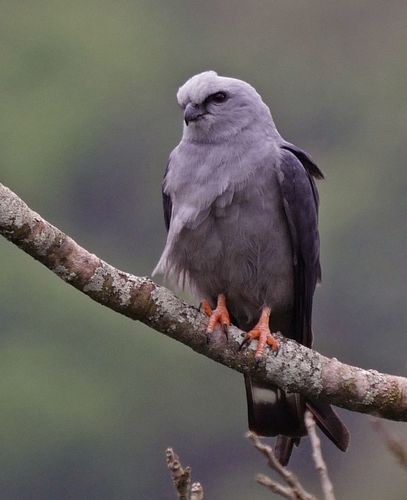
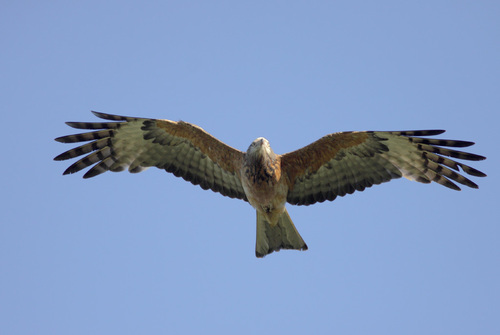
The square-tailed kite, scientifically named Lophoictinia isura (Gould, 1838), is a medium-sized raptor as an adult. Its body measures 50–56 cm in total length, with the tail accounting for about half of this length. It has a wingspan of 130–145 cm; males weigh an average of 501g, while females weigh an average of 650g. Square-tailed kites are specialized canopy-dwelling predators that occupy a range of habitats, including open and temperate forests, woodlands, scrub, heathland, riverine trees, and savannah. They can also be found in well-vegetated urban areas such as golf courses and parks, and are seldom found on the ground. They are widespread across Australia, but do not occur in dense populations. These birds are typically solitary, though they may be seen in pairs or family units (consisting of parents and dependent young) during the breeding season. In Eastern New South Wales, nesting square-tailed kites have home territories of 50 km², with approximately 13 km of space between nesting pairs. Current IUCN Red List population estimates place the total number of individuals between 1000 and 10,000, and an estimated 67% of these individuals are sexually mature. Many square-tailed kites migrate every year, but the timing and destination of these migrations depend on each individual bird's home territory, and some birds do not migrate at all. As part of mate selection, square-tailed kites perform aerobatic courtship flights that let individuals display their flying skill. During these flights, the male pursues the female, and the pair perform aerial rolls where they present their talons but do not make contact. These flights may also be accompanied by vocalizations. The square-tailed kite's breeding season varies by location: populations in temperate Australia breed between July and February, while populations in more tropical areas breed around April. When nesting, square-tailed kites prefer large, tall trees in uncleared areas. Both the male and female participate in building the nest, or they will modify and add to disused nests built by other species. Nests are either the typical bowl shape or a stick platform, and nest construction usually takes around 3 weeks. During the breeding season, the female roosts on the nest at night, while the male roosts in a nearby tree. When young are present, both the male and female roost near the nest. Square-tailed kites make only one breeding attempt per season, and produce a clutch of 1–2 round to oval shaped white eggs. The incubation period for this species is around 40 days, and care of offspring is shared by both parents. Incubation is primarily done by the female, while the male hunts and brings food back to the nest, though males have also been observed incubating eggs. The nestling stage lasts around 8 weeks, and offspring remain dependent on their parents for an additional two months after fledging. Newly hatched offspring are semi-altricial, and develop feathers and vocalizations by 3 weeks after hatching. Square-tailed kites exhibit pre-copulatory behaviors including vocalizations and allopreening. The species also displays territorial behavior during the nesting and incubation stages of their annual cycle: they make vocalizations and fly at other birds to drive them away from nesting sites. Threat displays toward other birds include 'staring' with the bill open, holding the head and neck feathers upright, and raising the wing and mantle feathers to make the bird appear larger and more threatening.