About Lophocampa maculata Harris, 1841
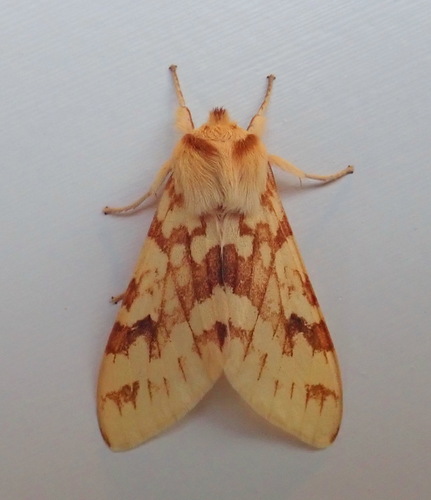
Lophocampa maculata, commonly called the Yellow-spotted tussock moth, mottled tiger, or spotted halisidota, is a species of moth in the tribe Arctiini (the tiger moths) of the family Erebidae. This species was first formally described by Thaddeus William Harris in 1841. It is distributed across Canada, the western United States, and southeastern Alaska, and its range extends south along the Appalachian Mountains into South Carolina and Kentucky. This moth has a wingspan of 35–45 mm. Adults fly from May to July, and larvae are present from July to September. There is one generation of this species per year. Larvae go through five instars as they develop. In the final instar, the body is black at both ends, with a yellow or orange section in the middle that has black spots in some populations. The larvae feed on the leaves of poplars, willows, alders, basswoods, birches, maples, and oaks. Although it is a tiger moth, it is commonly called a tussock moth because its caterpillar has tufts of hair. As defined by Wiktionary, a tussock is a tuft or clump of green grass or similar green vegetation that forms a small hillock.