About Lophocampa argentata Packard, 1864
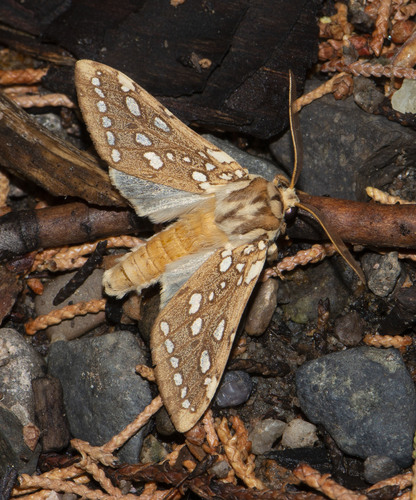
Lophocampa argentata, first described by Packard in 1864, has the following characteristics. Its caterpillars are brown or reddish-brown and very hairy, with bundles of black and yellow hairs running along their backs. Hairs from both caterpillars and pupae can cause skin irritation in humans. Adult moths have reddish-brown wings marked with silvery spots. This moth species is distributed from British Columbia to southern California, extending east to Arizona, Nevada, New Mexico, Colorado, Utah, Wyoming, and possibly reaching northern Mexico. Its larvae feed on a wide range of host plants in western North America, most commonly conifers, with Douglas fir being a particularly notable host. Larval feeding on host plant needles can lead to defoliation. Two recognized subspecies have distinct ranges and host preferences: L. a. subalpina occurs in the Rocky Mountain region, where it feeds on pinyon and juniper; L. a. sobrina is found in California and feeds on Monterey pine. Lophocampa argentata produces one generation per year. In mid-summer, adult moths lay clusters of eggs on host plant needles and small branches. Larvae hatch approximately three weeks after eggs are laid. Groups of young larvae build silk tents on their host plants, stay inside these tents through the winter, and re-emerge to resume activity in the spring. When warmer spring weather arrives, larvae feed individually before pupating in late spring. Pupation occurs inside brown cocoons attached to host plants or placed on the forest floor.