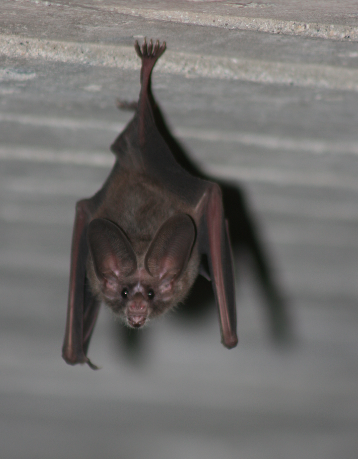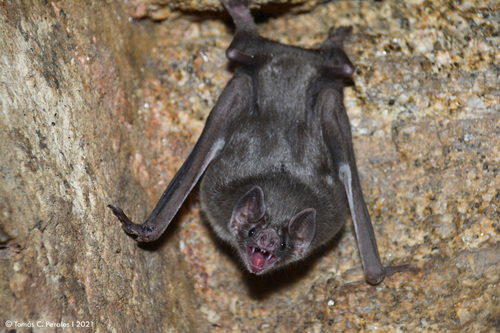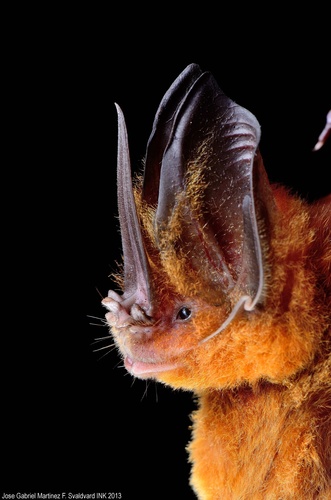
About Lonchorhina aurita Tomes, 1863
Taxonomic History
Lonchorhina aurita was first described by Tomes in 1863.
Ear Morphology
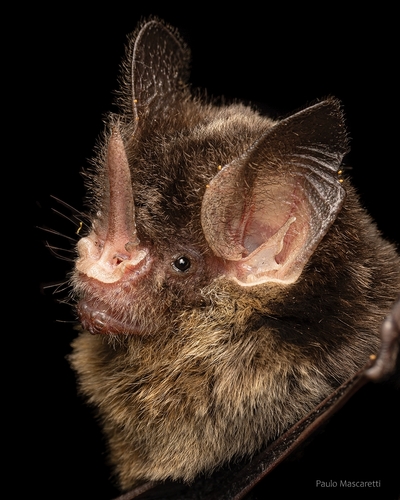
This bat has long ears with sharply pointed tips.
Nose-leaf Characteristics
It has a large nose-leaf that can reach up to 20 mm (0.79 in) long.
Fur and Membrane Coloration
Its fur is dark brown or black, and its wing membranes (patagia) are also black.
Size and Weight
Forearm length of individuals ranges from 47–57 mm (1.9–2.2 in), and body mass ranges from 10–22 g (0.35–0.78 oz).
Dental Traits
It has a dental formula of 2.1.2.3 over 2.1.3.3, giving a total of 34 teeth.
Geographic Distribution
This species occurs in multiple countries across Central and South America: Belize, Bolivia, Brazil, Colombia, Costa Rica, Ecuador, El Salvador, French Guiana, Guatemala, Guyana, Honduras, Mexico, Nicaragua, Panama, Peru, Suriname, Trinidad and Tobago, and Venezuela.
Elevation Range
It has been recorded in lowland areas as well as at elevations up to 1,500 m (4,900 ft) above sea level.
Diet
L. aurita is primarily insectivorous, although there is one documented record of an individual eating fruit.
Activity Period and Roosting Sites
It is nocturnal, and roosts in sheltered sites such as caves or culverts during the day.
Roosting Colony Dynamics
Roosts host colonies of 10 to 500 individuals, and L. aurita shares these roosts with other bat species.