About Lon zabulon (Boisduval & Le Conte, 1829)
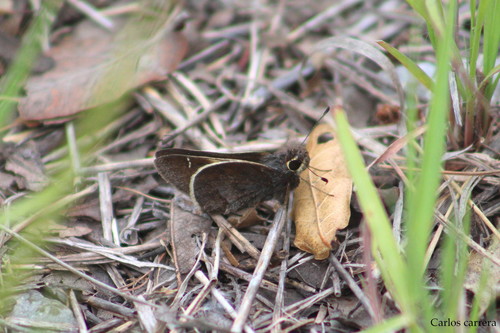
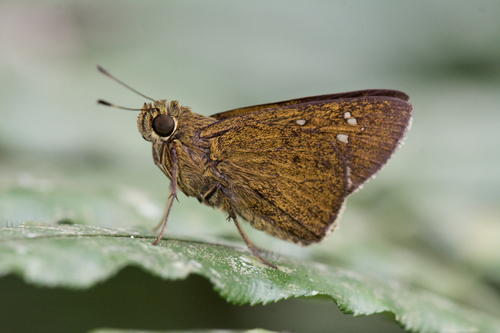
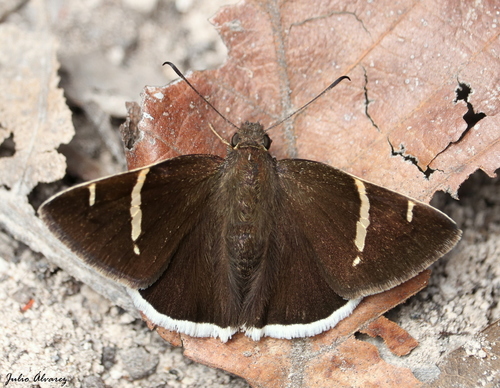
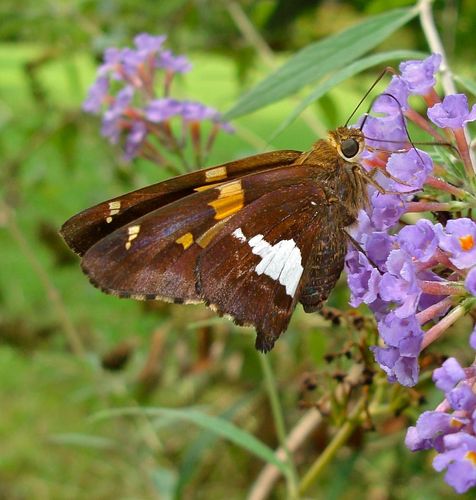
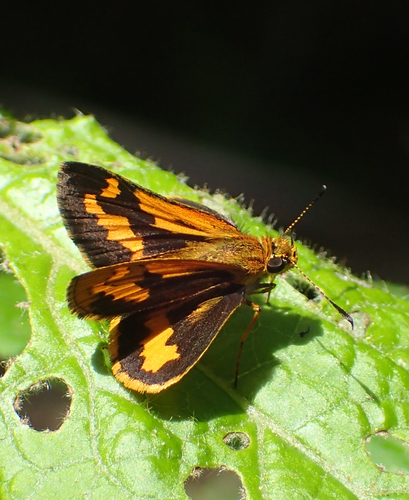
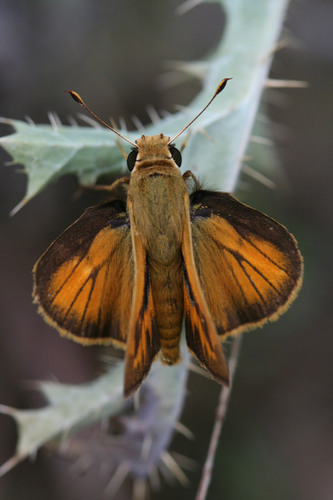
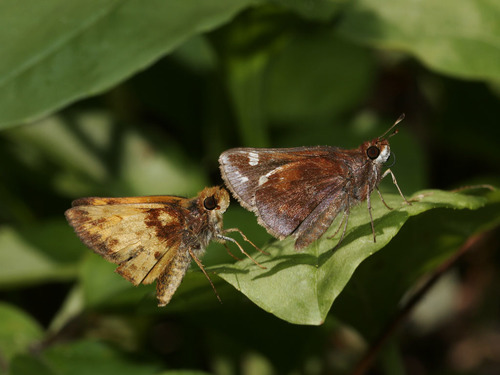
Lon zabulon, commonly known as the Zabulon skipper, is a small butterfly with slim, triangular wings. The upperside of the male’s wings is mostly orange, with dark brown margins. The underside of the male’s wings is mainly yellow-orange with dark brown margins, and features a yellow basal spot enclosed by brown. The upperside of the female’s wings is dark brown, with large glassy spots near the outer margin of the forewings. The underside of the female’s wings is brownish-burgundy; the hindwing has a white streak along its costal edge, and the wing margins are broadly frosted. This species has a wingspan of 1+3⁄8 to 1+5⁄8 inches (35–41 mm). This species’ distribution ranges from Wisconsin east to the East Coast of North America, and extends south to Georgia, Texas, and Panama. The Zabulon skipper occupies a wide variety of habitats. It is most often found at woodland edges, woodland openings, and alongside roads, particularly in areas near streams. It can also successfully adapt to additional habitats including suburban areas, parks, and gardens. In its life cycle, adult males spend all day perching while searching for females. Courtship typically occurs in the afternoon, though it can occasionally take place as early as 8:20 a.m. Females lay their eggs singly on the underside of host plant leaves. The larva is either brown or green, and both color forms sometimes have a pinkish hue. It is often impossible to distinguish Zabulon skipper larvae from the larvae of closely related species. The chrysalis is usually formed inside a shelter made of a leaf. It is brown, with a lighter brown abdomen marked with small black dots. The overwintering stage of this species is unknown. The Zabulon skipper produces two broods per year.