About Lomatium parryi (S.Watson) J.F.Macbr.
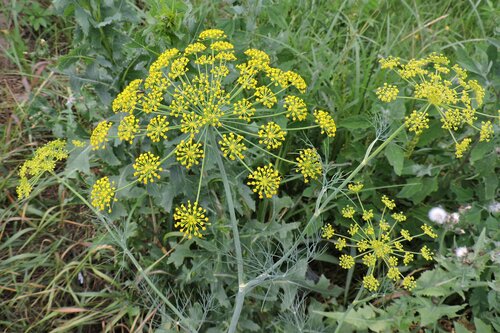
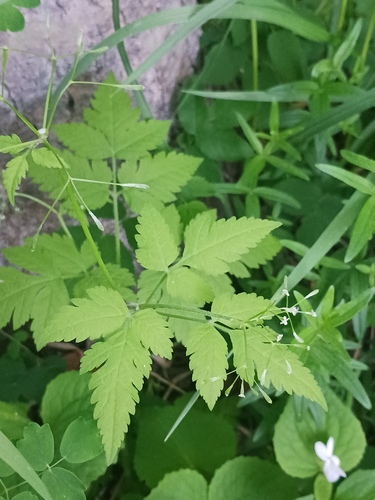
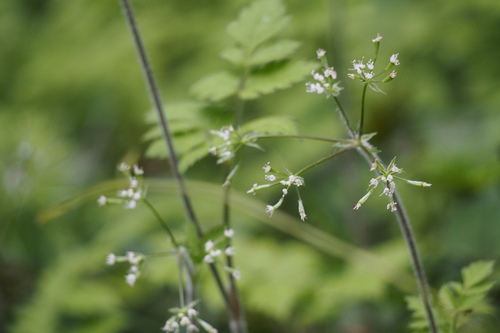
Lomatium parryi (S.Watson) J.F.Macbr. is a low-growing species that develops from a taproot. It produces small leaflets, and reaches a total height of 20 to 40 centimeters. Its flowering stems are usually stout, with hollow internodes. Hairy basal leaves on this plant are divided into many small segments. Yellow flowers are produced in late winter and early spring, arranged in an umbrella-shaped cluster called an umbel. The flowers are very small and easily overlooked; they have 8 to 15 ray florets and five prominent stamens, all just a few millimeters across. Below each flower cluster at the end of the pedicels, 3 to 8 bractlets grow, which may be either whole or divided. Insect pollination produces winged seeds. The fruits are flat, wide schizocarps with lateral wings, which split into two single-seeded halves. This species often retains dead leaves and flower stalks from the previous growing season. Lomatium parryi is a member of the Apiaceae family, related to celery and carrots. Early Native Americans harvested and consumed its roots. It acts as a natural larval host plant for some subspecies of Papilio indra, and can be used as a food source when rearing these subspecies in laboratory settings.