About Lomatium nudicaule (Nutt.) J.M.Coult. & Rose
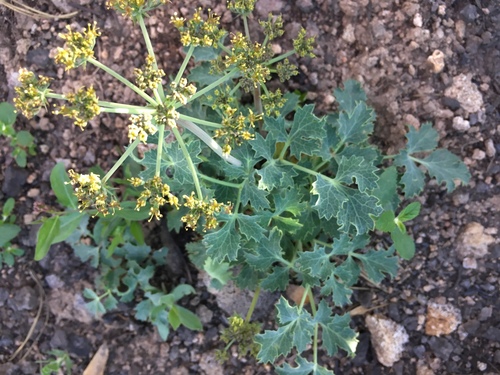
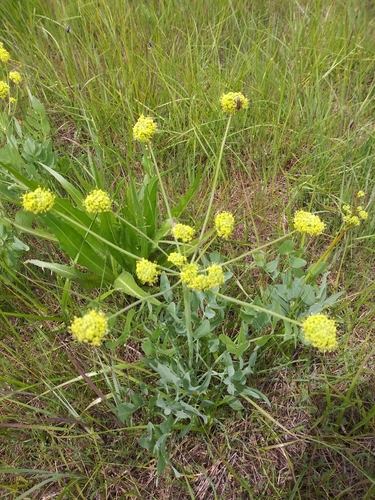
Lomatium nudicaule (Nutt.) J.M.Coult. & Rose is a species of flowering plant in the carrot family. Its common names include barestem biscuitroot, pestle lomatium, desert parsley, Indian celery, and Indian consumption plant. This species is native to western North America, ranging from British Columbia to California to Utah. It grows in several habitat types, including forest and woodland. It is a perennial herb that grows 20 to 45 centimetres (7.9 to 18 inches) tall from a thick taproot. It generally does not produce an above-ground stem; its inflorescence and leaves emerge directly from ground level. Each leaflet is 2 to 5 centimetres (0.8 to 2 inches) long, with an ovoid to orbicular outline and coarse teeth near its tip. The inflorescence grows on a stout, leafless peduncle that widens at its top, and it blooms as an umbel of yellow flowers. This plant has a long history of traditional use by many Native American groups. It is a traditional food source, and its plant parts are used in traditional medicine, including as a treatment for tuberculosis. It is also used ceremonially in connection with salmon fishing and processing among peoples of southwestern British Columbia and Washington. For example, the W̱SÁNEĆ (Saanich), who call this plant ḴEXMIN, burn its seeds in a fire or on a stove while drying salmon. Among other groups, including the Kwakwaka'wakw and Nuu-chah-nulth, the seeds are burned as incense at funerals, and chewed by singers to soothe their throats.