About Lomatium cuspidatum (J.M.Coult. & Rose) Mathias & Constance
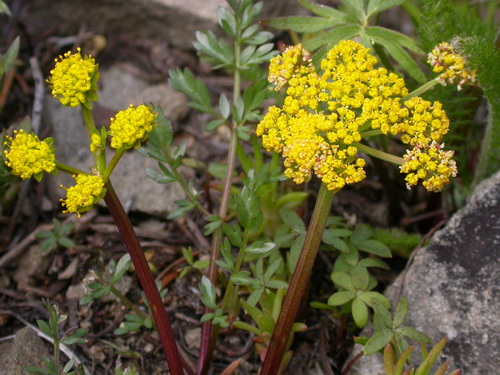
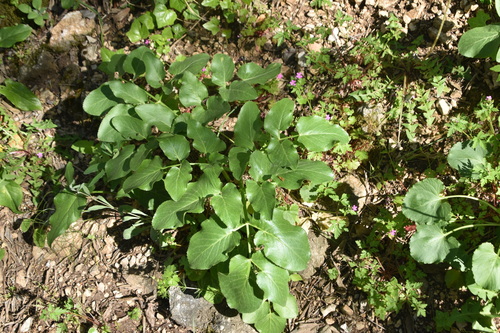
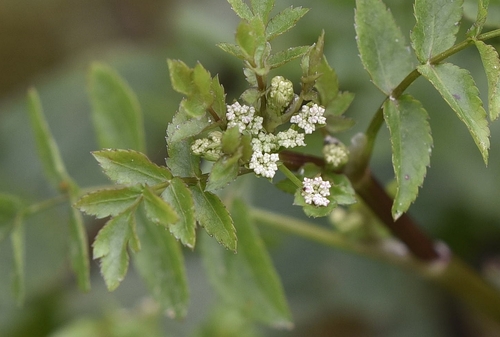
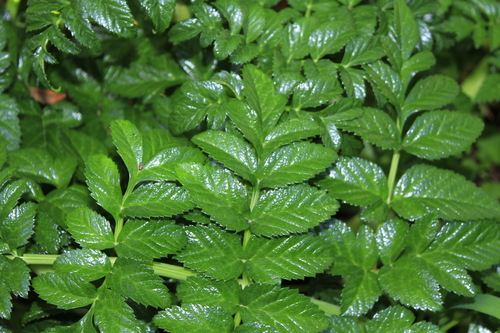
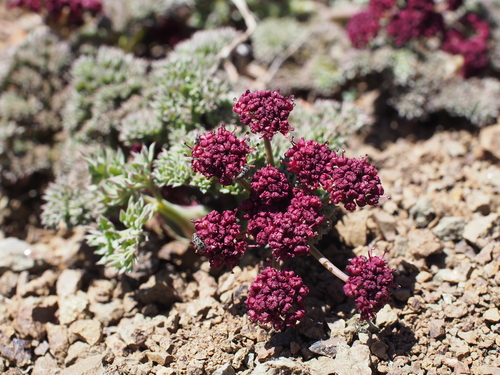
Description: Plants of Lomatium cuspidatum are small, typically growing less than 20 cm (8 inches) tall. Its foliage ranges in color from blue-gray to green, and grows on thick fleshy stalks. The leaves are fleshy and dissected into leaflets that end in a sharp extended tip, a feature that gives the species its epithet cuspidatum. Flowers emerge early in the growing season, from May to June. They are held above the foliage in a compound umbel, on thick fleshy stalks that grow from the base of the plant. Flower colors range from brownish purple to brownish red. Previously grouped similar plants with yellow flowers and flatter leaflets that grow on non-serpentine soil in the northern Wenatchee Mountains are now classified as a separate species, Lomatium roneorum.
Range and Ecology: Lomatium cuspidatum is endemic to the serpentine regions of north Teanaway in the Wenatchee Mountains of Washington State. It grows on seasonally dry, sunny slopes made up mostly of small loose rocks (scree) and unstratified soils derived largely from serpentinite rock. Due to seasonal dryness, slope instability, and the unusual mineral composition of serpentine-associated rocks, these slopes support a sparse, highly restricted flora. This flora includes four species found only in this specific region: Lomatium cuspidatum, Chaenactis thompsonii, Oreocarya thompsonii, and Poa curtifolia. Several other less narrowly restricted plant species are also notably associated with serpentine soils and bedrock outcrops in the Wenatchee Mountains, including Polystichum lemmonii, Ivesia tweedyi, Androsace nivalis, Adiantum aleuticum, Aspidotis densa, Galium serpenticum, and Claytonia megarhiza.