About Lolium perenne L.
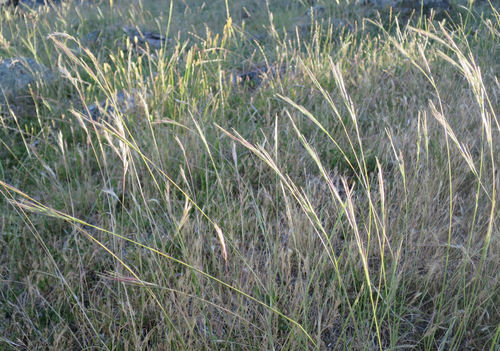
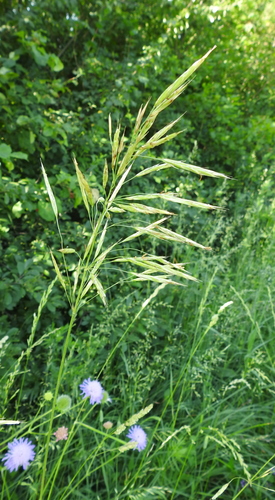
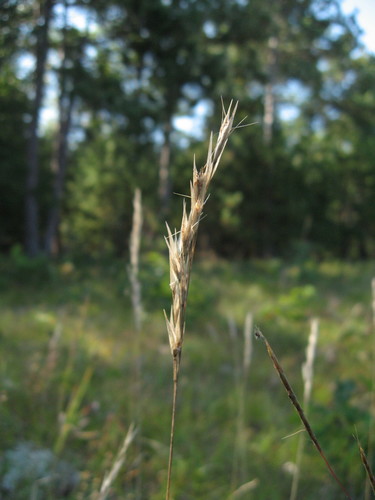
Lolium perenne L., commonly known as perennial ryegrass, is a low-growing, tufted, hairless grass with a bunching (tillering) growth habit. Its leaves are dark green, with a smooth, glossy lower surface; the leaves have untoothed parallel sides and prominent parallel veins on their upper surface. When in bud, leaves are folded lengthwise, with a strong central keel that creates a flattened appearance—this folded bud structure distinguishes it from Italian ryegrass (Lolium multiflorum), which has rolled leaves. The ligule is very short, truncated, and often difficult to see. Small white auricles grip the stem at the base of the leaf blade. Leaf sheaths at the base are usually tinged pink and hairless. Stems can grow up to 90 cm tall.
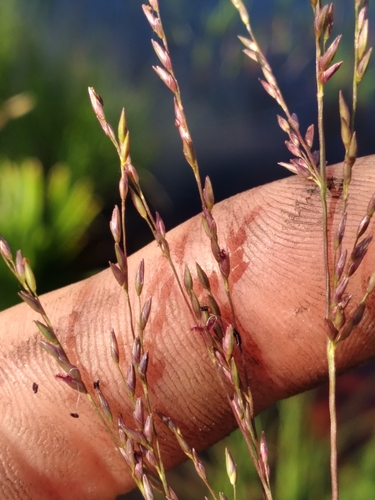
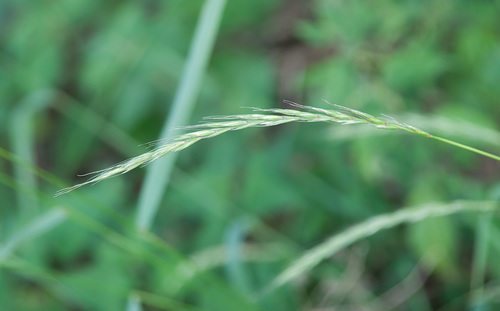
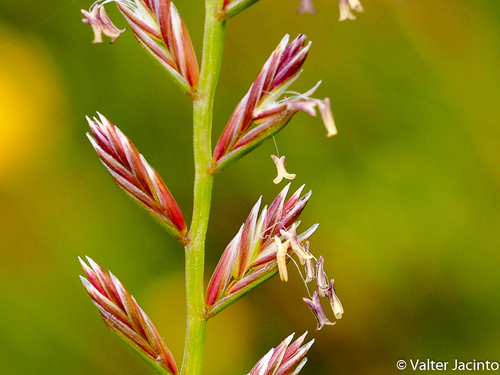
The inflorescence of perennial ryegrass is unbranched, with spikelets arranged on alternating sides, positioned edge-on to the stem. Each spikelet has only a single glume, located on the side facing away from the stem, and holds between four and 14 awnless florets, which is another difference from Italian ryegrass. Its anthers are pale yellow, and the plant flowers from May to November. It has a fibrous root system, consisting of thick main roots and thinner lateral branches, and its roots are usually associated with arbuscular mycorrhizal fungi.
Perennial ryegrass is native to Europe, the Middle East, North Africa, and extends eastward to central Asia. Because it is a useful grass for livestock fodder and grazing, it has been introduced by settling farmers to new regions including North America, South Africa, and Australia. It can be used to prevent erosion, stabilize soil, and create hardwearing turf for lawns and golf courses. Due to its strong ability to produce seed, easy germination, and vigorous growth, it has spread from planted fields to roadsides, trackways, footpaths, wasteland, river banks, and sand dunes. In introduced regions, it may be considered an invasive species that competes with native plants.
Perennial ryegrass is an important pasture and forage plant, and it is included in many pasture seed mixes. It produces a high yield in fertile soil, and in Britain and Ireland, it is frequently sown for short-term ley grassland, most often grown alongside red clover (Trifolium pratense) or white clover (T. repens). In Britain, it is also used as an indicator of non-species-rich grassland, because it outcompetes rarer plants and grasses, especially in fertile soils. Agri-environment schemes including the Countryside Stewardship Scheme, Environmentally Sensitive Areas Scheme, and Environmental Stewardship provide funding for species-rich grasslands that do not have an overabundance of ryegrass.
Selected seed mixes of perennial ryegrass are used extensively for sports pitches, particularly for winter sports in temperate climates, due to its wear resistance and ability to regenerate. It is commonly used in the southwest United States to overseed winter lawns. Bermudagrass is the typical summertime lawn grass in states such as Arizona, as it tolerates high temperatures, but it goes dormant during cooler winter months. To avoid brown dormant lawns, many homeowners, public spaces, and golf courses overseed bermudagrass lawns with perennial ryegrass in early to mid-September. Perennial ryegrass is also the grass used for the courts at the All England Lawn Tennis Club in Wimbledon; since 2001, the courts have been sown with 100% perennial ryegrass to improve durability and strengthen the sward to better withstand the increasing wear of modern play.