About Lodoicea maldivica (J.F.Gmel.) Pers.
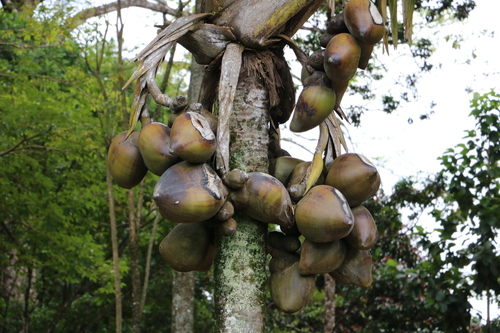
Lodoicea maldivica (J.F.Gmel.) Pers. generally grows to 25–34 m (82–112 ft) tall. Mature plants have fan-shaped leaves 7–10 m long and 4.5 m wide, with a 4 m petiole, while juvenile plants produce much longer petioles that can reach up to 9 m (30 ft) long. This species is dioecious, meaning male and female reproductive structures grow on separate individual plants. Male flowers form in a catkin-like inflorescence up to 2 m (7 ft) long; this inflorescence continues producing pollen over a ten-year period, making it one of the longest-living inflorescences currently known. Mature fruit is 40–50 cm in diameter, weighs 25–45 kg, and contains the largest seed in the entire plant kingdom. The fruit requires 6–7 years to mature, plus an additional two years to germinate, and it is sometimes called sea coconut, love nut, double coconut, coco fesse, or Seychelles nut. While the functional traits of Lodoicea are similar to other trees found in monodominant humid tropical forests, it has unique features including a very large seed, an effective nutrient-funnelling mechanism, and a diverse community of closely associated animals. These characteristics suggest it has a long evolutionary history under relatively stable environmental conditions. Of the six endemic monospecific palm species native to the Seychelles, Lodoicea maldivica is described as the "only true case of island gigantism among Seychelles flowering plants, a unique feature of Seychelles vegetation". This species holds a number of confirmed botanical records. It produces the largest known wild fruit, which weighs between 25–45 kg (55–99 lb), though domesticated pumpkins and watermelons can grow much heavier. The fruit is made up of three carpels, which are the largest carpels of any flowering plant (only the carpels of Entada spp. are longer). This fruit is also the slowest to mature, requiring 8 to 10 years total to reach maturity. Mature seeds weigh 10–25 kg (22–55 lb), making them the heaviest seeds in the world. After germination, the seed produces the longest known cotyledon, which can reach up to 4 m (13 ft), and occasionally grows as long as 10 m (33 ft). It is the slowest growing of all large trees, though some small to medium-sized desert trees grow more slowly. At the Peradenaya Royal Botanic Gardens, Lodoicea maldivica grew an average of 33 mm (1 in) per year over a 40-year monitoring period. Female flowers of this species are the largest of any palm, reaching up to 10 cm (3.9 in) in diameter. Its male catkins, which can grow up to 2 m (7 ft) in length, are the longest known catkins. The sepals, which grow alongside the developing fruit, are the largest known sepals, reaching up to 23 cm (9 in) long by 15 cm (6 in) wide. The leaves of Lodoicea maldivica have the longest lifespan of any monocot: they take nine years to develop in the terminal spike, then function as fully mature leaves for another nine years. Adult Lodoicea maldivica can hold up to twenty leaves, which may have a maximum potential lifespan of 24 years. Finally, this species is the most efficient plant known for recovering nutrients from dying moribund leaves. Of the six endemic palm species in the Seychelles, it is the only dioecious species, with male and female flowers growing on separate plants. Lodoicea maldivica naturally inhabits rainforests with deep, well-drained soils and open exposed slopes, though its growth is reduced on these eroded slopes. It is grown as an ornamental tree in many tropical regions, including botanical gardens in Sri Lanka and Thailand. Subsidiary populations have been established on Mahé and Silhouette Islands in the Seychelles to support conservation of the species. Its seeds have been highly prized for centuries; their rarity sparked great interest and fetched high prices in royal courts, and the tough outer seed coat has historically been used to make bowls (including Sufi/Dervish alms bowls called kashkul) and other instruments.