About Lobivia pentlandii (Salm-Dyck) Britton & Rose
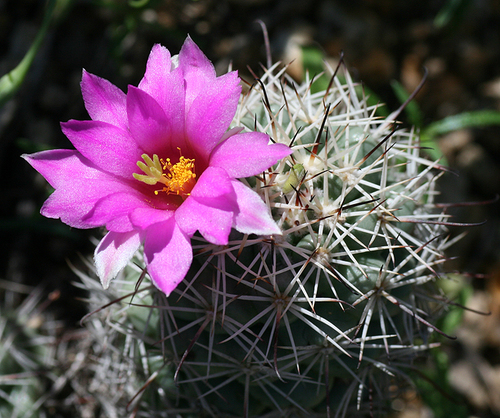
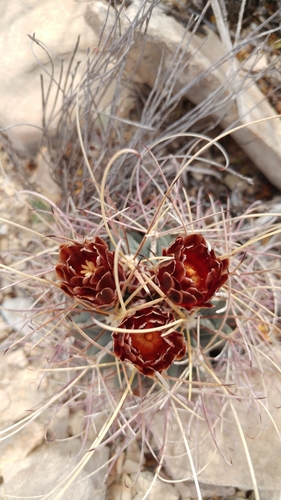
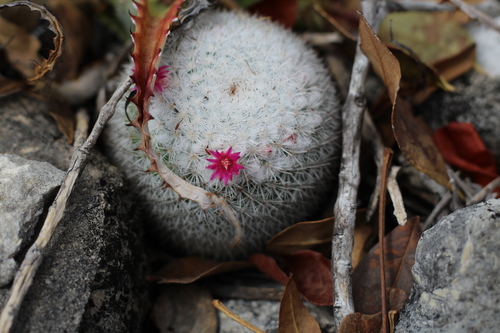
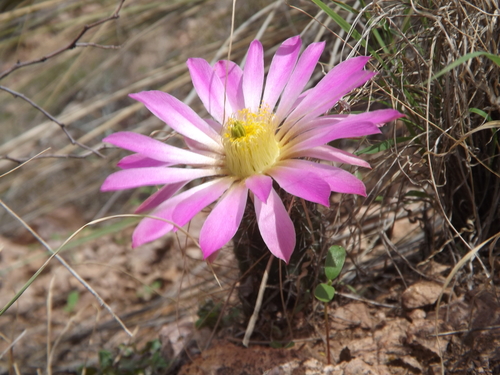
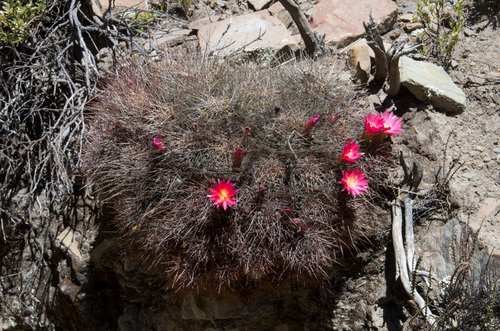
This cactus species, currently also referred to as Lobivia pentlandii (Salm-Dyck) Britton & Rose and often treated under the scientific name Echinopsis pentlandii, typically grows in clusters. Its shoots are spherical to ovoid in shape, bright green, and often glaucous, reaching a maximum diameter of about 12 centimeters. The apex of the shoot is often sunken. The species has 12 to 15 tall ribs that are deeply notched and divided into long, hatchet-shaped, sharp-edged cusps. Areoles are spaced approximately 2 centimeters apart on these ribs. Thorns that grow from the areoles are variable in appearance. A single central spine, which is sometimes absent entirely, measures 3 to 9 centimeters long. There are 5 to 15 backward-curving marginal spines, which are yellowish brown and reach up to 3 centimeters in length. The short, funnel-shaped flowers open during the day, and their color varies widely, ranging from pale purple-pink to red, orange, or yellow. The throat of the flower is often a lighter shade than the rest of the bloom. Flowers are 4 to 6 centimeters long, and their very stout floral tube can grow up to 1 centimeter in diameter. The spherical fruits are juicy, sticky, and have a diameter of 1 to 1.2 centimeters. Echinopsis pentlandii is widespread at high altitudes in the Andes, where it occurs in the Peruvian regions of Cusco and Puno, and in the Bolivian departments of La Paz, Oruro, Cochabamba, and Potosí.