About Lixus concavus Say & T., 1832
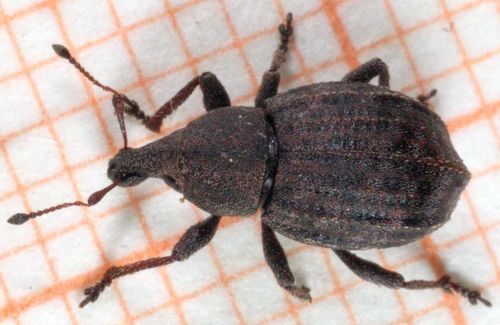
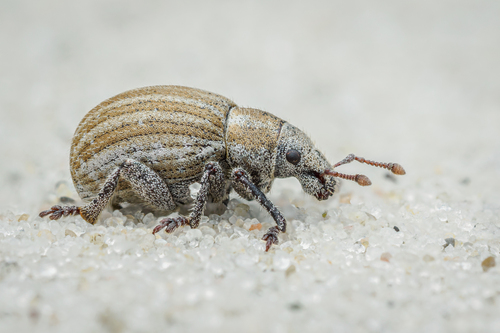
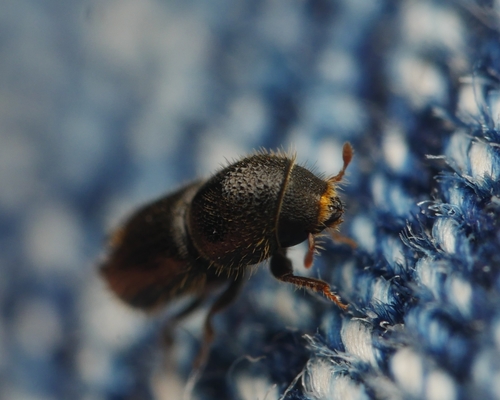
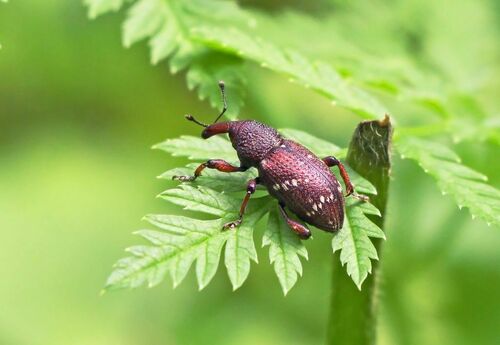
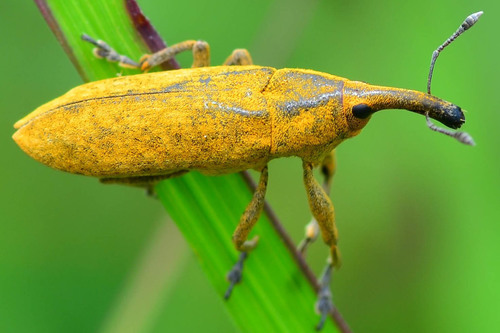
Lixus concavus has several distinct physical characteristics. It has a unique long snout and geniculate antennae with small clubs. This beetle is roughly half an inch long, solid black in color, and covered with a layer of yellow dust; it overwinters in the adult life stage. Its eggs are yellow-white and oblong. The legless larva is a grub that reaches about 3/4 inch in length, with a brown head that usually has an inverted Y-shaped mark. Lixus concavus is distributed across the eastern United States, ranging westward to Idaho, Utah, and Texas. In Canada, it has been recorded in Ontario. This species is commonly called the rhubarb curculio. Adult rhubarb curculios overwinter in leaf litter or similar sheltered sites, and become active again in mid-May. Adults create punctures for feeding and egg-laying in plant crowns, roots, and stalks. A jelly-like sap oozes out of these wounds, forming glistening gum drops that often trap small bits of external material. Eggs laid in rhubarb never hatch, as they are killed by the plant's sap or crushed by rhubarb's growing tissues. Lixus concavus can successfully complete its entire life cycle in the stalks of curly dock, sunflowers, and thistles. Females lay eggs one at a time in 1⁄8-inch (3.2 mm) deep cavities they create while feeding, and the eggs hatch between one week and 10 days after being laid. Typically only one grub develops per host plant. The larva burrows through the plant stalk all the way down to ground level, and pupates after approximately nine weeks. Before pupating, the larva chews an exit hole that the future adult will use to leave the plant. The pupa is whitish and measures 14 to 15 mm long, and already shows the adult's characteristic long snout on its head. Short spines mark each of its abdominal segments. The larva develops into an adult over the course of a few weeks, and the new adult feeds for a few more weeks before finding a sheltered site to overwinter. This weevil produces only one new generation each year. Besides puncturing plant stalks, adult weevils feed along the edges of leaves, which leaves clearly visible notches in damaged plant tissue.