About Litsea calicaris (A.Cunn.) Benth. & Hook.fil. ex Kirk
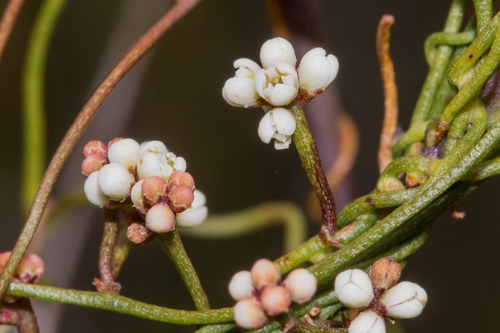
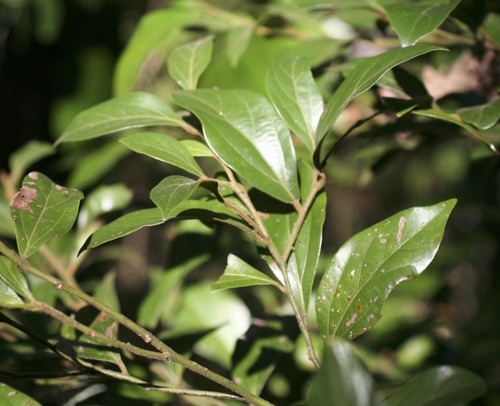
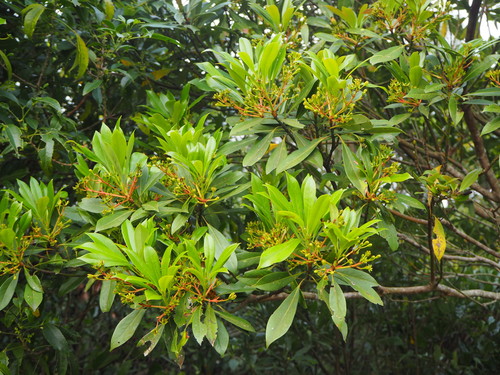
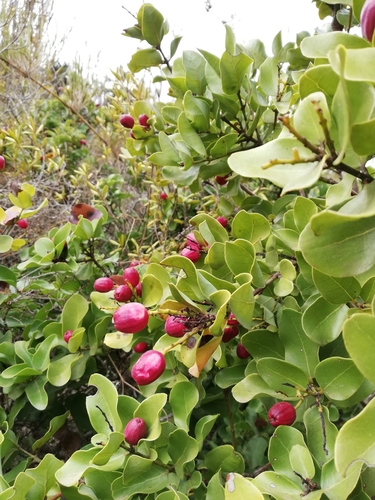
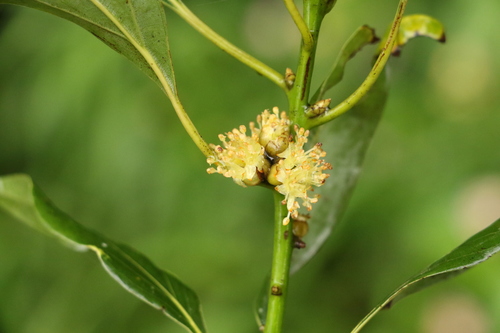
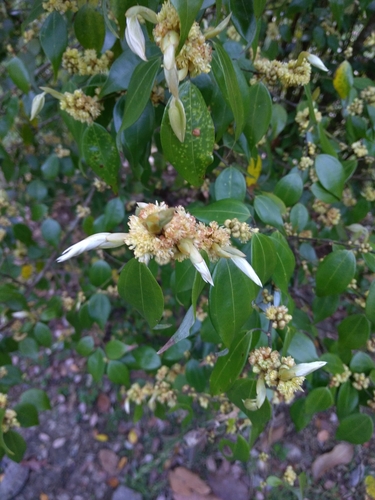
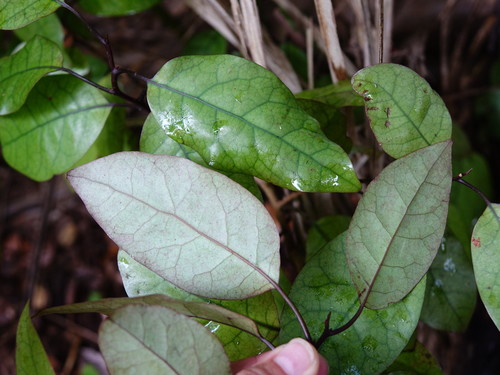
Litsea calicaris, commonly known as mangeao, is the only New Zealand member of the genus Litsea. This genus contains 200 to 400 species of evergreen or deciduous trees or shrubs, found across tropical and subtropical Asia, Australia, North America, and South America. More than 70 of these species grow in China, mostly in the warm regions of southern and southwestern China. Mangeao can grow up to 15 metres (49 ft) in height, and has smooth, dark greyish brown bark. Its leaves are arranged oppositely, are 5–15 centimetres (2.0–5.9 in) long, ovate or ovate-oblong in shape, and bluish-green on their lower surface. The flowers are small, borne in umbels of 4 to 5 individual flowers. The fruit is an oblong-ovoid drupe, 2 millimetres (0.079 in) long, reddish in colour, and sits on a disc-shaped base. A mangeao tree planted by Reverend Richard Taylor in 1860 was measured roughly 120 years later, at 13 m (43 ft) tall with a trunk diameter of 92 cm (36 in). Mangeao is most common in the southern part of its native range, especially in the hill country between Te Kūiti and the west coast, and in the Kaimai Ranges between Katikati and Rotorua. It grows best on limestone-derived soils or heavy clays, requires good drainage, has low tolerance to drought, and young trees are very sensitive to frost. Mangeao produces high-quality timber with excellent strength and flexibility. The wood is white, firm, strong, and combines toughness with elasticity and light weight. In the 19th century, the timber was used for many purposes, including making barrels, wheels, boat frames, railway carriages, and sporting goods. It is also used to produce high-quality sliced veneer. Current uses of the wood include making violins and the ribs of kayaks. Mangeao timber was also used to build the 9th floor of the Beehive, the executive wing of the Parliament of New Zealand. Māori are recorded to have used mangeao for its medicinal properties.