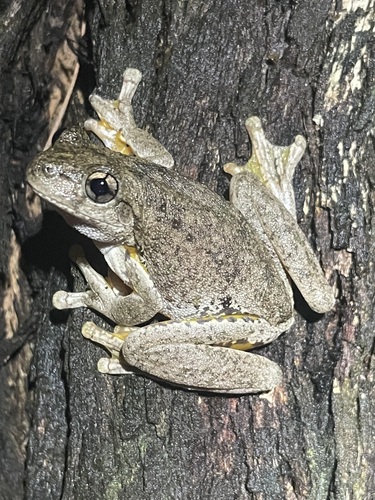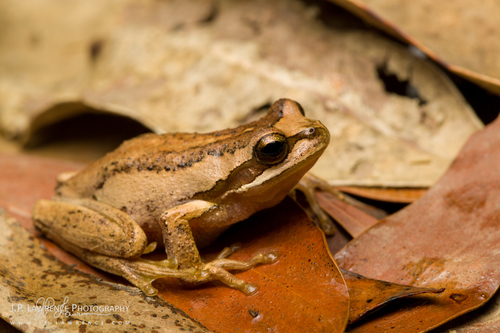
About Litoria verreauxii (Duméril, 1853)
Subspecies Recognition
This species has two recognized subspecies.
Nominate Subspecies Dorsal Coloration
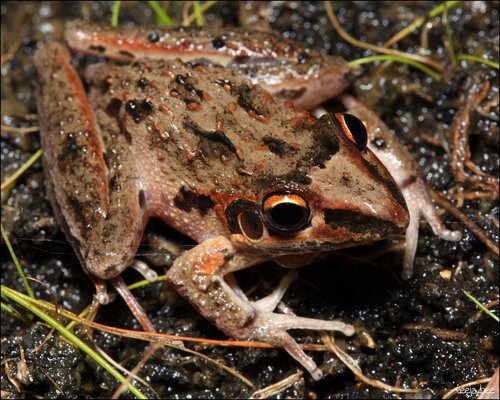
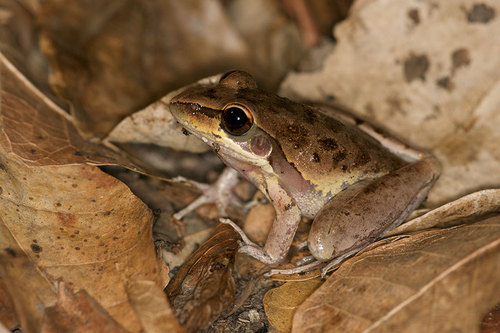
The nominate subspecies, L. v. verreauxii, has a dorsal coloration ranging from light brown to reddish brown, with an often indistinct, broad darker patch that begins between the eyes and extends across the back. A dark stripe runs from the nostril, through the eye, and down to the shoulder; this stripe is underlain by a white line that starts at the mouth.
Nominate Subspecies Leg Markings
The thighs and backs of the legs are red with small black spots, and larger black spots appear on the fronts of the thighs.
Alpine Subspecies Dorsal Patterning
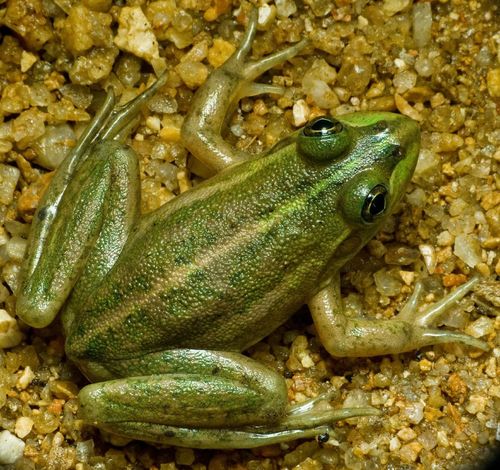
The second subspecies, L. v. alpina, is mostly green on its dorsal surface, with two parallel brown bands that run down the back. These bands originate at the eyes and are separated by a narrow green stripe.
Shared Leg Patterning
For this subspecies, the color and patterning of the thighs and backs of the legs match that of the nominate subspecies.
Shared Belly Color and Size
The belly of both subspecies is white, and both reach a maximum length of approximately 35 mm (1.4 in).
Nominate Subspecies Habitat
Regarding ecology and behavior, Verreaux's tree frog (the nominate subspecies) lives in swamps, dam impoundments, and creeks located within woodland, farmland, forest, and cleared land.
Nominate Subspecies Calling Behavior
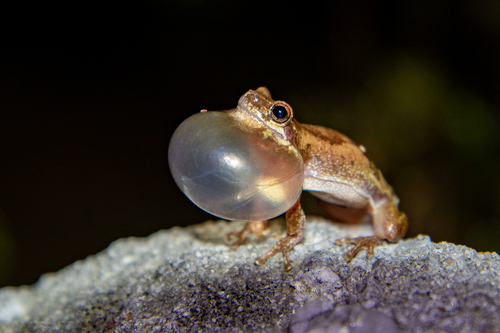
Males call from vegetation along pond edges or from the ground throughout the year, though calling becomes much more intense in autumn and spring, and after rain.
Nominate Subspecies Call Characteristics
As the species is sometimes called the whistling tree frog, its call is a whistling noise.
Alpine Subspecies Habitat
The alpine subspecies, alpine tree frog, inhabits alpine ponds and creek pools in moorland, alpine forest, and partly cleared land.
Alpine Subspecies Calling Behavior
Males of this subspecies have a call similar to the nominate subspecies, and call from areas beside breeding sites during spring and summer.
Alpine Subspecies Threat
The chytrid fungus is thought to be partially responsible for the population decline of the alpine subspecies.