About Lithraea caustica Hook. & Arn.
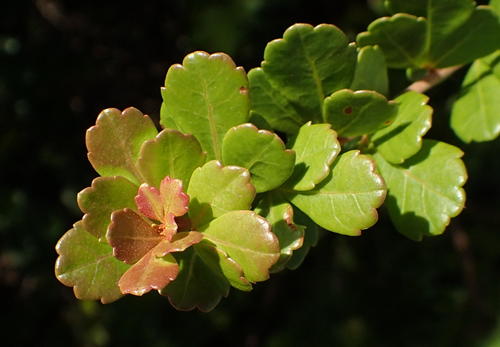
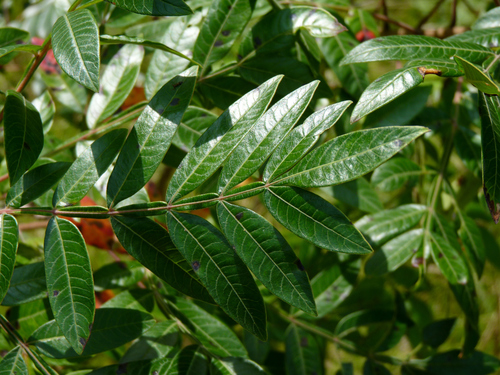
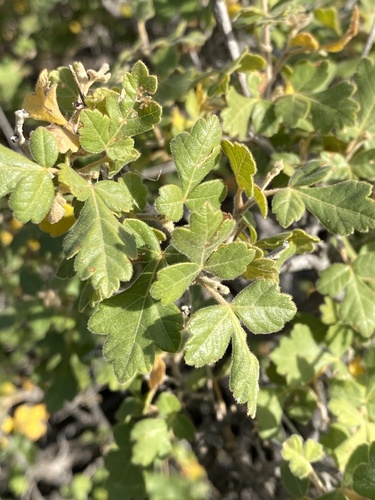
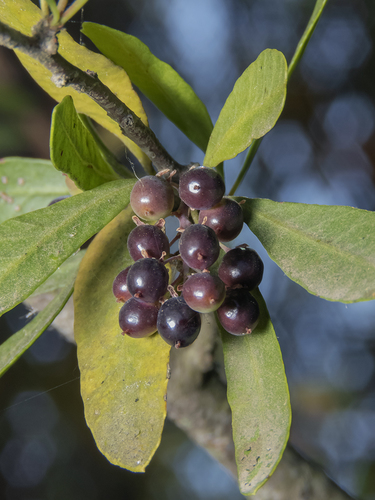
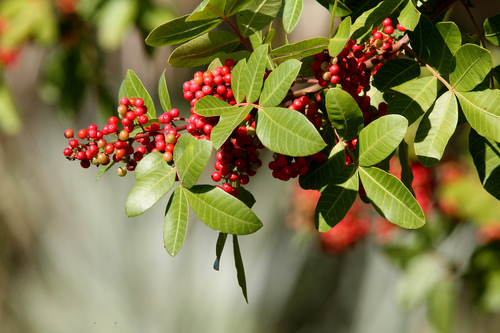
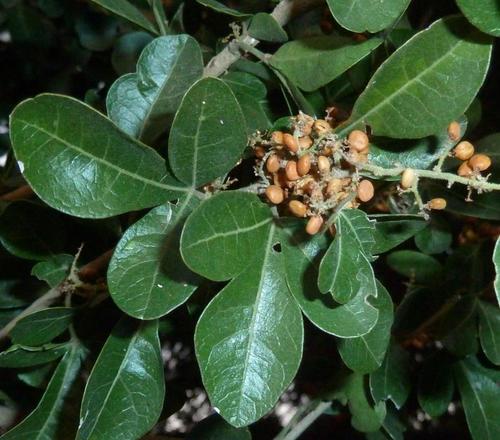
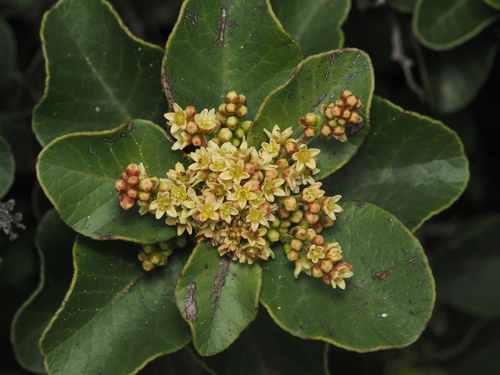
Commonly called litre, Lithraea caustica Hook. & Arn. is an evergreen plant with oval leaves that have smooth or undulating margins. Its leaves are leathery because they contain high levels of lignin and cellulose. When left undisturbed, it can grow into a full-sized tree; tree-shaped litre plants were common in the past, but changing land use patterns mean the species is now most often found growing as a shrub. It produces large underground burls, and new growth can sprout from these burls after the plant is cut or burned. This growth trait is shared with most woody plants native to its region. In terms of ecology, litre grows in matorral climates, which are areas with climates similar to the southern Mediterranean. In Central Chile, this species has the broadest range of any matorral shrub found in the region. Its abundance increases in response to grazing. The plant reproduces by seedling dispersal, which is carried out primarily by birds including Turdus falcklandii, Mimus thenca, and Phytotoma rara, and foxes of the genus Pseudalopex. It is drought resistant thanks to its deep, extensive root system. It is likely one of the least disturbed plants in its habitats because of its toxicity. 29 families, 57 genera, and 69 species of beetles have been found living on the plant and in the surrounding soil.