About Lithophane furcifera Hufnagel, 1766
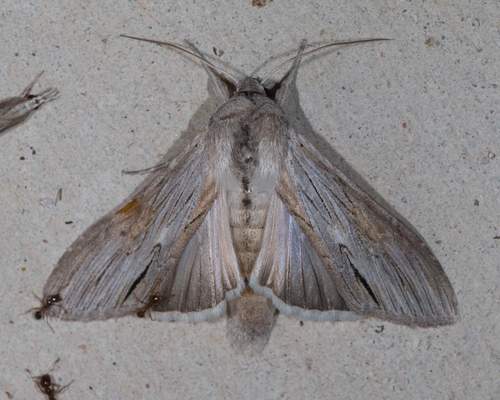
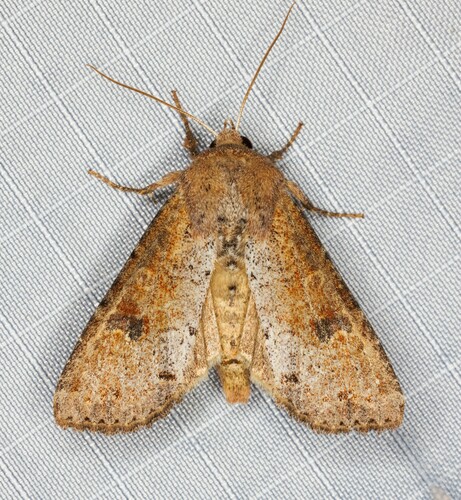
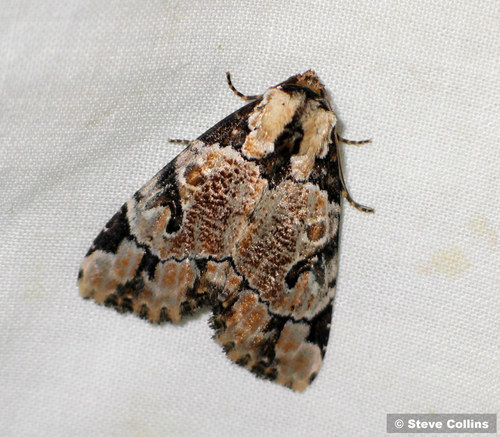
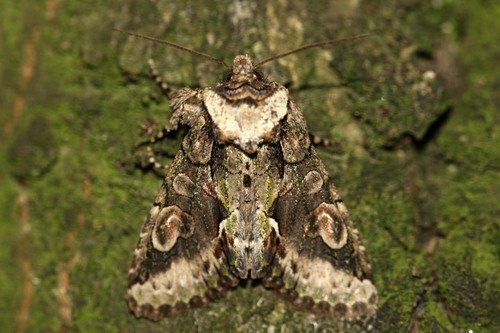
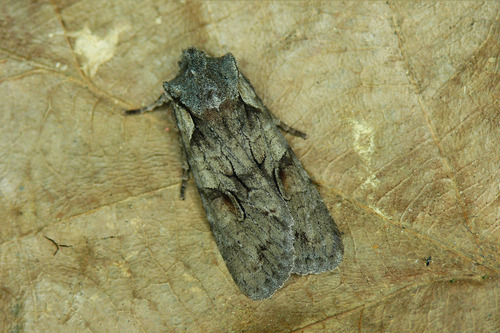
This species treatment follows Seitz's description. Lithophane furcifera Hufnagel, 1766 (listed as L. furcifera Hubn. here, with synonyms bifurca Esp. and conformis Hbn.) has forewings that are purplish grey dusted with olive. A thick black streak runs from the base below the cell, curving upward and forking, and it is edged above by a white line. A second black streak runs from the claviform spot to the outer line. The lines are black, edged with pale grey, and fairly distinct. The claviform and orbicular spots are pale blue grey and edged with black. The reniform spot has a fulvous crescent on its inner side, and its lower edge is curved and black. There is a dark median shade and a narrow shade before the submarginal line. The hindwings are brownish fuscous, darker toward the termen, and sometimes have a large cellspot and a dark outer line.
Aberration rufescens Spul. has forewings that are more or less flushed with reddish; nearly all individuals of this aberration appear to be female, while males remain dark purple grey without the red tinge. Aberration suffusa Tutt, found in the West of England, is violet black. Aberration variegata Spuler, which corresponds to the zinckenii form of Lithophane lamda, is much more variegated, with dark markings highlighted by silvery grey.
The larva is red brown or earth brown marbled with black dots and streaks, with pale yellow lines. It has a dorsal series of diamond-shaped marks and a subdorsal series of oblique black streaks; a second larval form is reported to be green with yellow markings. The wingspan of Lithophane furcifera is 42–48 mm.