About Lithophane consocia Borkhausen, 1792
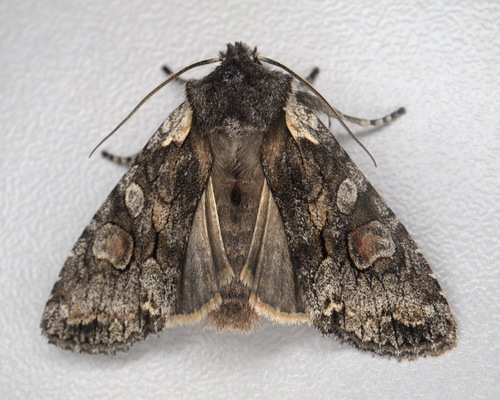
Lithophane consocia, commonly known as the scarce conformist or Softly's shoulder-knot, is a moth species in the family Noctuidae. It was first described by Moritz Balthasar Borkhausen in 1792, with the original scientific name credited as Lithophane consocia Borkhausen, 1792.
This moth is distributed across northern, central, and eastern Europe, extending eastwards to Siberia. There is only one confirmed record of this species in Great Britain, where an individual was observed in Hampstead, London, in September 2001.
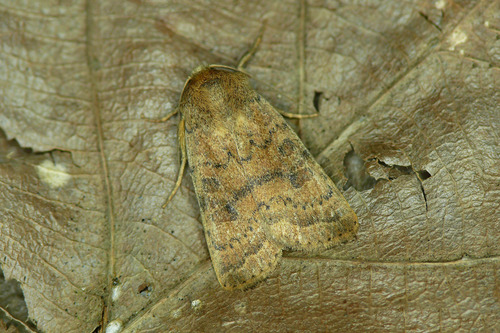
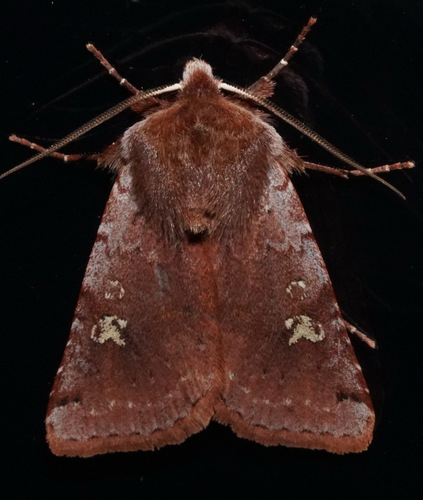
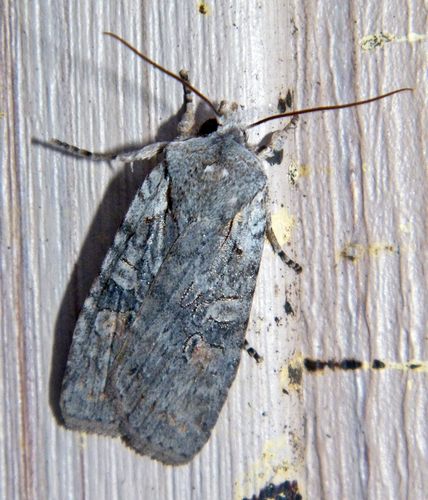
This species has a wingspan of 43–48 mm. Adalbert Seitz provided the following description of its forms and appearance: The forewing is silvery grey, more or less covered with purplish brown; it can be immediately distinguished from Lithophane furcifera by the pale patch at the base of the costa and the pale rings of its stigmata. All of its markings, including both lines and stigmata, are more prominent than those of L. furcifera. The dark form grisea Graes. (also called obscura Carad.) occurs in Amurland, while the form basidiluta Strand found in Norway and St. Petersburg has an entirely paler basal area of the wing. This description was originally published under the synonym L. ingrica H.-Sch., which also includes the synonyms conformis Frr. (not Hbn.) and cinerosa Guen.
The larva of Lithophane consocia is grey brown, with velvety black interrupted dorsal, subdorsal, and spiracular lines that are mixed with yellow and red. Adults emerge in September, overwinter, and remain active until May. The larvae feed on plants of the genera Alnus and Corylus.