About Lithomyrtus obtusa (Endl.) N.Snow & Guymer
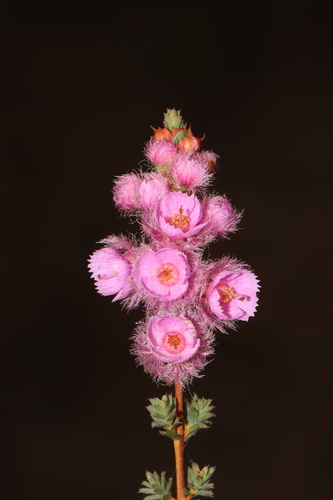
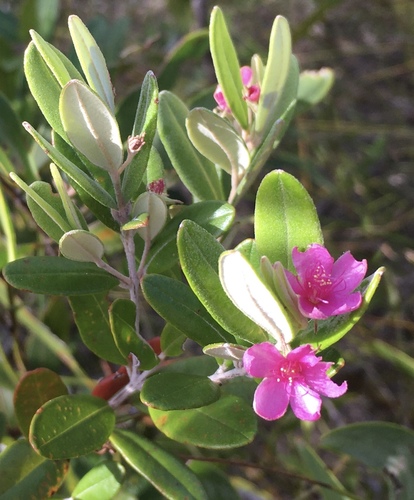
Lithomyrtus obtusa, commonly known as beach myrtella, is a flowering plant species in the myrtle family, Myrtaceae. This species grows in coastal regions of New Guinea and Queensland, Australia. It is a shrub that reaches a height between 1 and 2 metres. Its leaves have recurved edges and are hairy on the underside. In its native range, pink flowers bloom between January and September. After flowering, it produces globose to cylindrical fruit that retain a persistent calyx. In 1770, botanists Joseph Banks and Daniel Solander collected plant material of this species at Cape Grafton, Endeavour River, and Point Lookout (coordinates 14°49′S 145°13′E). This location should not be confused with another Point Lookout also named by James Cook. The collection took place during Lieutenant James Cook's first voyage of discovery. The species was not formally described until 1834, when Austrian botanist Stephan Endlicher classified it under the name Fenzlia obtusa. It was moved to the genus Myrtella in 1978, and later transferred to the genus Lithomyrtus in 1999, giving it its current accepted name Lithomyrtus obtusa (Endl.) N.Snow & Guymer.