About Linum monogynum G.Forst.
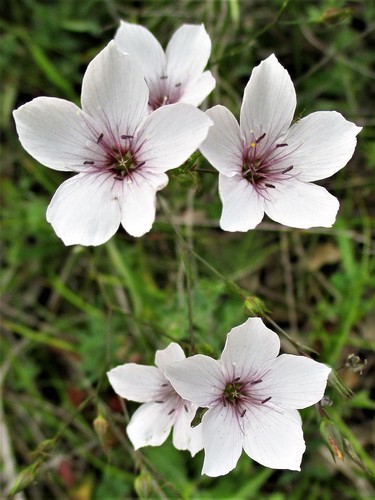
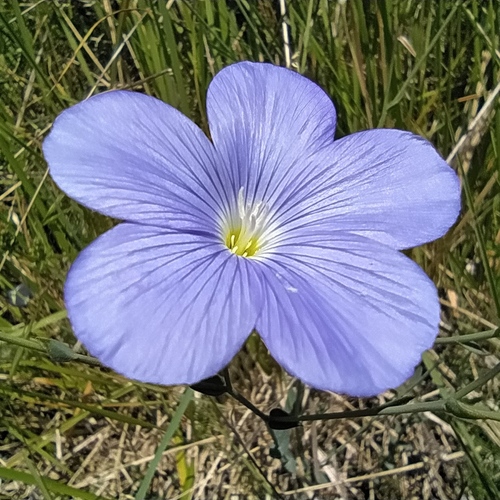
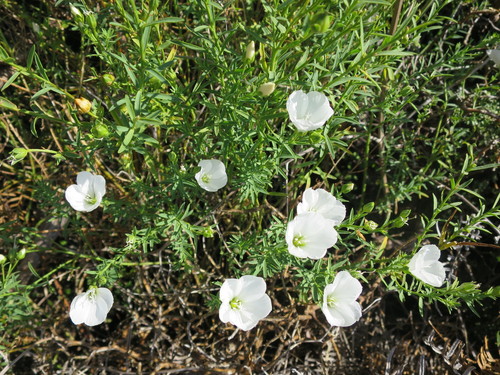
Linum monogynum, commonly known as rauhuia or New Zealand linen flax, is a flowering plant species in the family Linaceae that is endemic to New Zealand. It grows as a low-growing, short-lived perennial or woody subshrub, reaching a maximum height of 16 inches (41 cm). Its leaves are spear-shaped, leathery in texture, and colored gray to green, measuring between 0.2 and 1 inches (5 to 25 mm) in length. It produces attractive white flowers up to 1 inch (2.5 cm) in diameter, with five overlapping petals. This species is monoecious, meaning it bears both male and female organs on a single plant; this characteristic gives the species its Latin specific epithet monogynum, which literally translates to "single wife". Separate populations of this plant found on Chatham Island are more robust and produce blue-white flowers; these populations are often classified as L. monogynum var. chathamicum. Additional variation can also be observed among populations of this species that grow on New Zealand's mainland. This tough, compact plant is well adapted to tolerate the harsh conditions of New Zealand's coasts, including frequent gale-force winds carrying salt. It is a close relative of the Northern Hemisphere true flax, Linum usitatissimum, but it is not closely related to the far more widely known plants called New Zealand flax, which belong to the genus Phormium.