About Lintneria eremitus Hübner, 1823
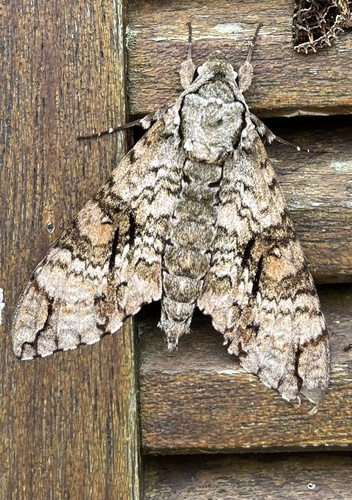
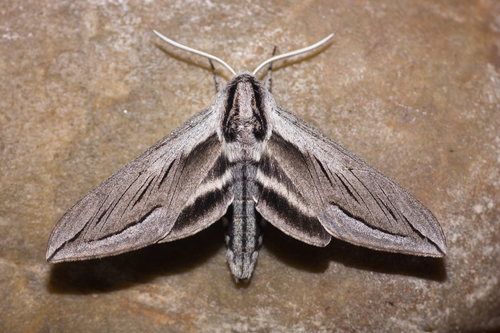
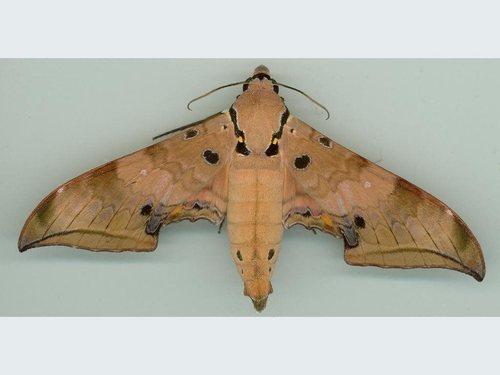
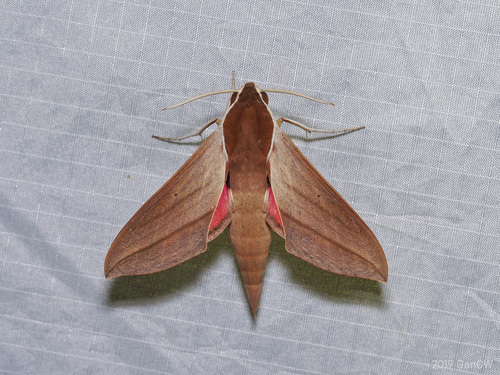
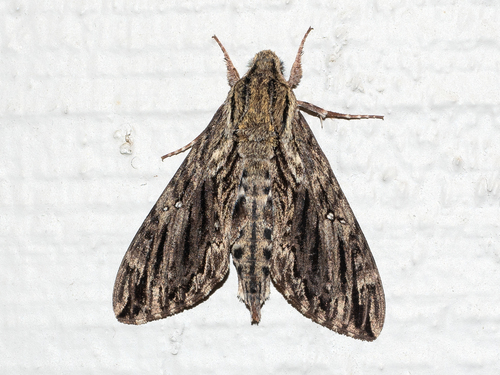
Lintneria eremitus, commonly called the hermit sphinx, is a moth belonging to the Sphingidae family. This species was first formally described by Jacob Hübner in 1823. It lives in temperate regions of the eastern United States, extending north into southern Canada across the Great Plains. It favors gardens and yards, but it is common anywhere that nectar sources and larval host plants are available. This moth is often easily mistaken for the Canadian sphinx, Sphinx canadensis, but the two species do not usually share the same geographic range. The wingspan of Lintneria eremitus measures 65–75 mm. It produces one generation each year, with adults active in flight from late June through August. Adult moths feed on nectar from deep-throated, light-colored flowers, including species of phlox (Phlox) and milkweed (Asclepias). Adults generally fly at dusk, and they are easily attracted to artificial light sources. The caterpillars of this moth feed on many plant species from the Lamiaceae family, including species from the genera Lycopus, Mentha, Monarda, and Salvia. Larvae can have green, black, or brown coloration.