About Lindenia tetraphylla (Vander Linden, 1825)
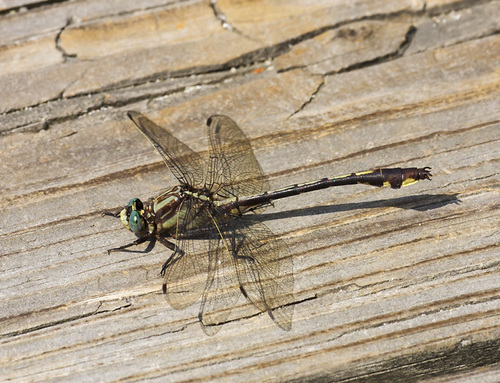
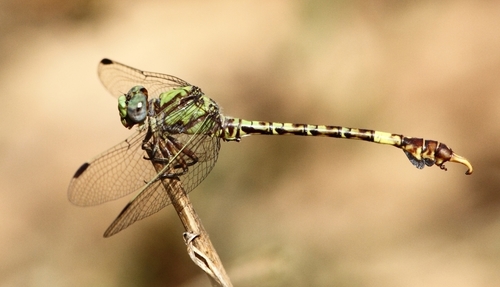
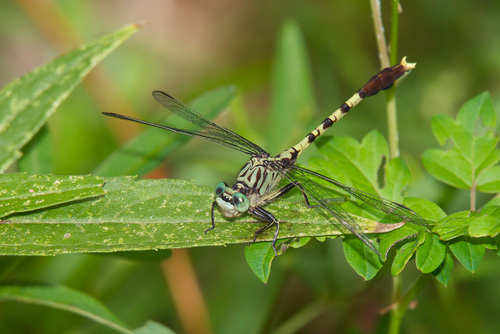
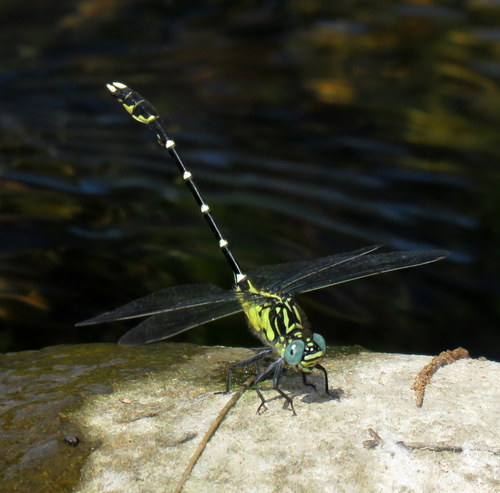
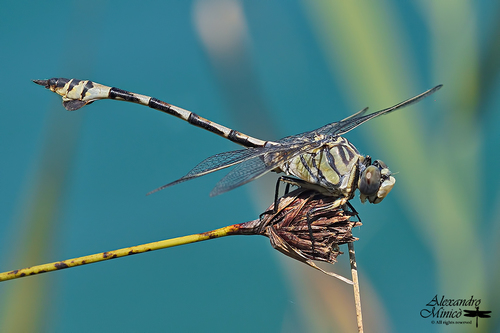
Adults of Lindenia tetraphylla are easily recognizable by their impressive body size, which ranges from 69 to 80 mm in length. They also have distinctive leaf-shaped flaps on the underside of the abdomen tip, a feature unique among European dragonfly species, along with characteristic wing venation. These flaps give the long, narrow abdomen a club-shaped outline. The species' base body color is pale yellow, marked with variable-sized dark brown or black patches that also appear on the pterostigma. Completely black individuals can be found in southern Croatia and Montenegro, and this dark coloration is likely a result of their development in cold springs. Adult Lindenia tetraphylla fly during the summer, from the end of May through August. This species, commonly called bladetail, breeds in larger lakes and large, slow-flowing rivers. As a pioneer species, adult bladetails often wander far from their hatching site and can colonize new bodies of water, including abandoned gravel pits. They are most commonly found above lakes with wide reed beds or floating patches of aquatic plants, where females lay their eggs. Bladetail has a broad distribution across most of Central and Southwest Asia, and the eastern Mediterranean. However, populations are scattered across this range, and high population densities only occur at local sites. In the Mediterranean region, the species is restricted to coastal plains. The largest known local population is likely found on the banks of Lake Skadar, which sits on the border between Albania and Montenegro; a 2011 field census estimated one million individuals there. Lake Skadar is also one of only two known sites in Montenegro where bladetails are present. Individuals occasionally wander as far north as southwestern Slovenia, where one specimen was collected in the 1960s, but no individuals have been observed there since. The northernmost known breeding population of bladetail in the Mediterranean lives on the Croatian island of Cres. In North Africa, only individual sightings of male bladetails are recorded, and the species' current population status there is unknown.