About Linaria dalmatica (L.) Mill.
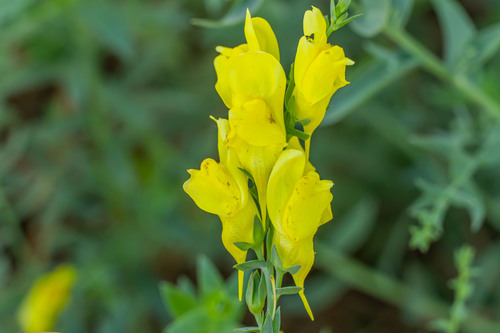
Linaria dalmatica (L.) Mill. is a herbaceous, short-lived perennial plant native to western Asia and southeastern Europe, and it has become an invasive weed in regions outside its native range. This species is currently classified in the Plantaginaceae family; it was previously placed in the Scrophulariaceae (Figwort) family. Its common names are Balkan toadflax, broadleaf toadflax, and Dalmatian toadflax. Linaria dalmatica produces distinctive yellow flowers with orange centers, which has led people to buy and grow it as an ornamental garden plant. It was introduced to North America for uses including fabric dye production, folk medicine, and as an ornamental plant, and it is now classified as a weed in both Canada and the United States. Linaria dalmatica has adapted to a wide range of growing conditions, and it is most commonly found growing on roadsides, in valleys, gravel pits, fields, pastures, and overgrazed or deteriorated rangelands. It tends to grow best in open, poorly maintained areas and disturbed soils. There is currently limited information available to confirm whether Linaria dalmatica is toxic to humans or animals. For animals, exposure to and consumption of this plant is relatively low, as it is not a preferred forage, though grazing on it does occur. It is likely that ruminants experience uncomfortable symptoms after their first consumption of the plant, and will then avoid grazing it. As of 2011, there was no published data on the toxicity of toadflaxes to humans, though the plant has been recorded as an irritant and a trigger for hay fever. Linaria dalmatica has been used as a sedative in folk medicine, and in a preparation containing vasicine it has been used as an expectorant in traditional Chinese medicine. The vasicine compounds found in this preparation can provoke miscarriage.