About Linanthus pungens (Torr.) J.M.Porter & L.A.Johnson
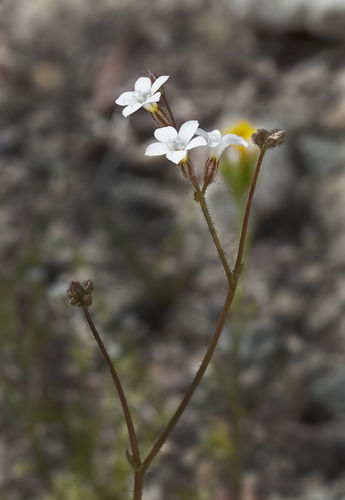
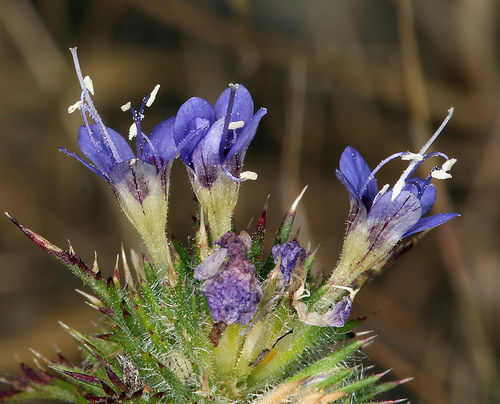
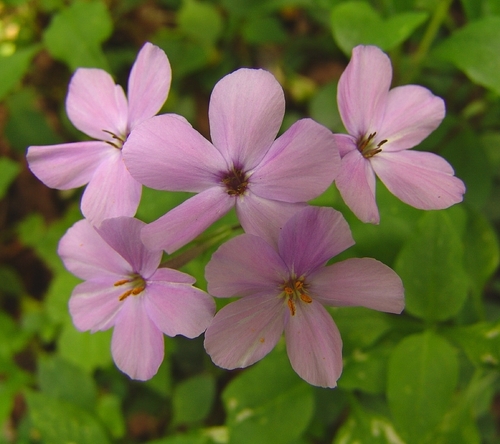
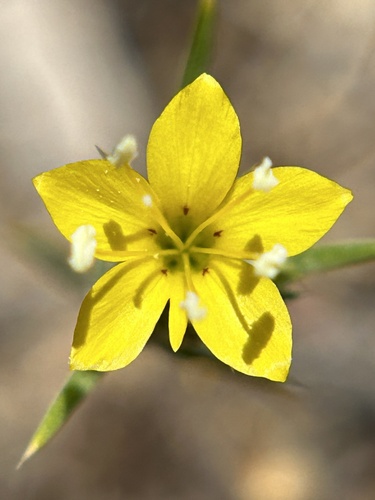
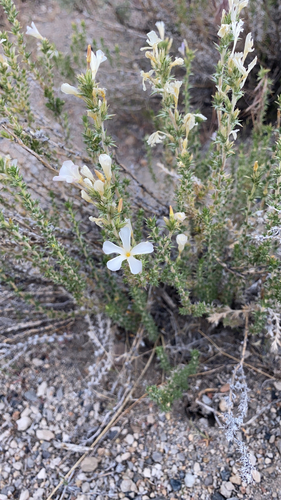
Linanthus pungens, also known by the synonym Leptodactylon pungens, is a flowering plant species in the phlox family. Its common names are granite prickly-phlox and granite gilia. It is native to western North America, where its distribution ranges from British Columbia south to Baja California, and east to Montana and New Mexico. This species has been described as either a shrub or a perennial herb, and it typically has a distinctly woody base. It produces multiple stems, which may grow erect, or be short and spreading to form a mat. Mat-forming growth is more common at higher elevations. When growing erect, the plant can reach 80 centimeters (2 7⁄12 feet) in height, though it is usually shorter. Its stems are densely covered with solid, narrow, sharp-pointed leaves. Flowers occur either singly or in clusters at the tips of stems. Each flower is funnel-shaped, 1 to 2.5 cm (3⁄8 to 1 inch) long, and may be white, cream, yellowish, or pinkish in color. Flowers generally open at night, and are pollinated by moths at this time. Both the flowers and herbage of the plant are aromatic. The fruit is a cylindrical capsule with three valves, and each valve holds approximately 5 to 10 seeds. This plant grows in pine forests, pinyon-juniper woodlands, sagebrush steppe, grasslands, and the ecotones between these habitat types. It can be found in subalpine and alpine climates, growing in mountain passes, high-elevation fell fields, and lower-elevation desert washes. It tolerates a wide range of growing conditions, from harsh winters on exposed mountain slopes to hot summers in desert valleys. It is most common in dry climates with low precipitation, and it is drought tolerant. It grows in poor, shallow, rocky, sandy, and salty soils, sometimes growing in thin layers of soil over bedrock. It can grow and is common on volcanic soils, including pumice, lava, and andesite. It is a dominant species in some areas, including white pine-mountain hemlock forests and shrublands in El Dorado County, California, and sagebrush habitats near the U.S. Sheep Experiment Station in eastern Idaho.