About Limonia acidissima L.
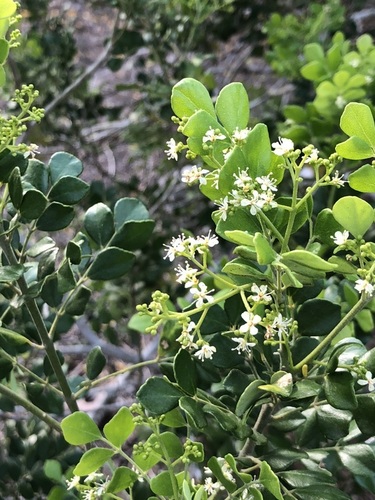
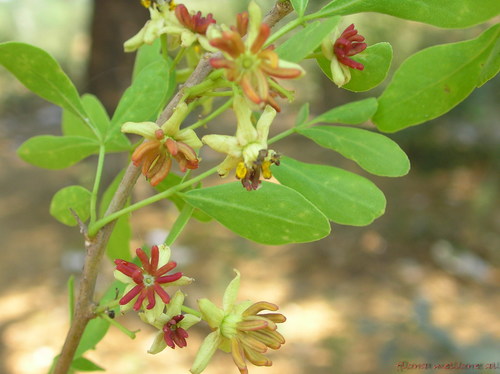
Limonia acidissima is a large tree that grows up to 9 metres (30 ft) tall, and has rough, spiny bark. Its leaves are pinnate, with 5 to 7 leaflets; each leaflet is 25 to 35 mm long and 10 to 20 mm broad, and gives off a citrus scent when crushed. The flowers of this tree are white and have five petals. It produces a large berry-type fruit 5 to 9 cm in diameter, which can have either a sweet or sour taste. The fruit has a very hard, rock-like rind that can be cracked open. Externally, the fruit is greenish-brown, and contains sticky brown pulp and small white seeds. In appearance, this fruit looks similar to the bael fruit (Aegle marmelos).
Limonia acidissima is native to India (including the Andaman Islands), Bangladesh, and Sri Lanka. It has also been introduced to Indochina and Malesia.
The fruit of Limonia acidissima is used to make astringent fruit juice and jams. Ripe fruit can be made into pickle, by mashing it with only green chili pepper, sugar and salt. In some parts of India, mainly Gujarat, the fruit pulp is used to make chutney, which serves as a main condiment eaten with and on top of meals, especially in winter. The wood apple (the common name for this species) is very common in Tamil Nadu, where ripe fruit is eaten mixed with sugar or another sweetener. In traditional Tamil song, the wood apple's Tamil name vilam is used as the canonical example of a two-syllable prosodic foot. In Myanmar, the wood of this tree is used to make thanaka, the distinctive local face cream.