About Lilium pumilum Redouté
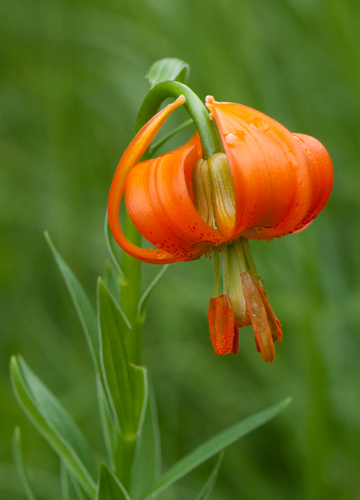
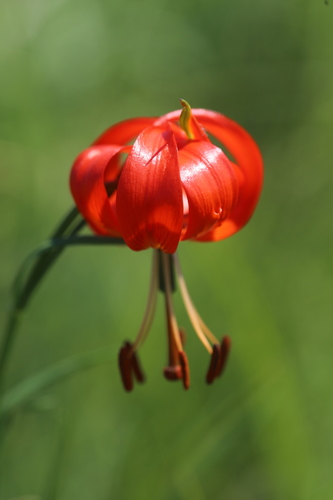
Lilium pumilum Redouté is an Asian bulbous plant species native to Mongolia, Siberia, the Russian Far East (Amur Krai, Primorye, Khabarovsk), Korea, and northern China. It is a stem-rooting lily that reaches up to 1 metre (3 ft 3 in) in height, though it typically grows shorter. Its bulbs grow 4–5 inches (100–130 mm) deep and have a lifespan of 2 to 4 years. The leaves are slender and grass-like. This species produces between one and twenty reflexed, nodding flowers, which are usually red and may have black spots. The flowers are scented. It was given the scientific epithet pumilum (pronounced poomillum) because it is smaller than most other lilies. In cultivation, Lilium pumilum is often short-lived, and it survives the longest when grown in well-drained soils. In Taiwan, both its flowers and bulbs are used as food, along with the flowers and bulbs of related species: L. brownii var. viridulum, L. lancifolium, and L. candidum.