About Lilium pardalinum Kellogg
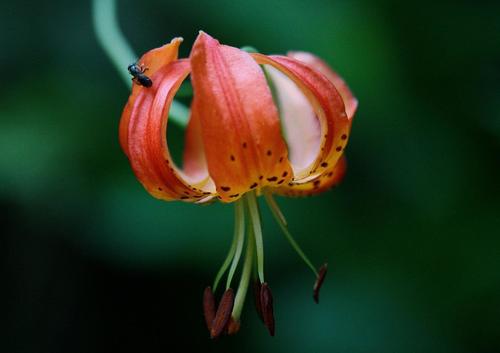
Lilium pardalinum Kellogg, commonly called leopard lily, typically reaches about 2 meters (6.6 ft) in height, though the tallest, most vigorous plants can grow up to 2.5 meters (8.2 ft). It produces small bulbs, many of which usually grow clustered together on a rhizomatous stock. Its flowers are Turk's-cap shaped, most often red-orange with numerous brown spots, and the plant usually blooms in July. This deciduous species goes dormant during the winter, and flower color can also be orange, red, or brown. It has simple leaves, and produces capsule-type fruits. Five subspecies are currently recognized: Lilium pardalinum Kellogg subsp. pardalinum, common name leopard lily, found in southern California and Baja California; Lilium pardalinum subsp. pitkinense (Beane & Vollmer) Skinner, common name Pitkin Marsh lily, found in northwestern California; Lilium pardalinum subsp. shastense (Eastw.) Skinner, common name Shasta lily, found in Oregon and northern California; Lilium pardalinum subsp. vollmeri (Eastw.) Skinner, common name Vollmer's lily, found in southwestern Oregon and northwestern California; and Lilium pardalinum subsp. wigginsii (Beane & Vollmer) Skinner, common name Wiggins' lily, found in southwestern Oregon and northwestern California. The Pitkin Marsh lily, Lilium pardalinum subsp. pitkinense, is federally listed as an endangered species. Lilium pardalinum is cultivated by specialty plant nurseries as an ornamental plant. It is used in native plant gardens, wildlife gardening, to add height and color to flower borders, and for cut flower production. This species has been awarded the Royal Horticultural Society's Award of Garden Merit.