About Ligusticum porteri J.M.Coult. & Rose
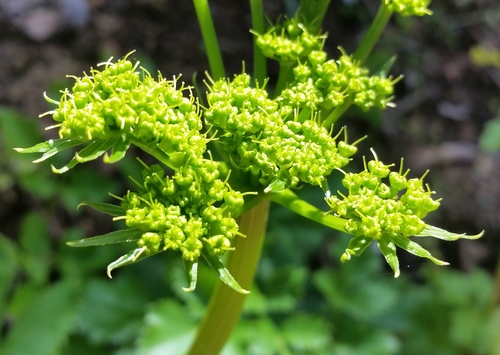
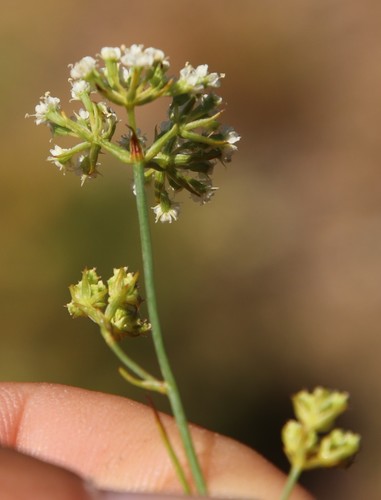
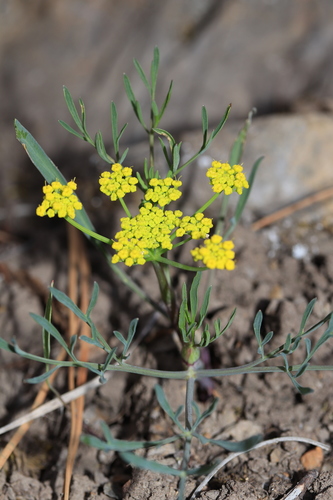
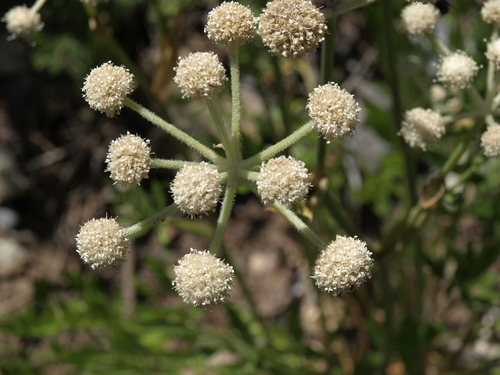
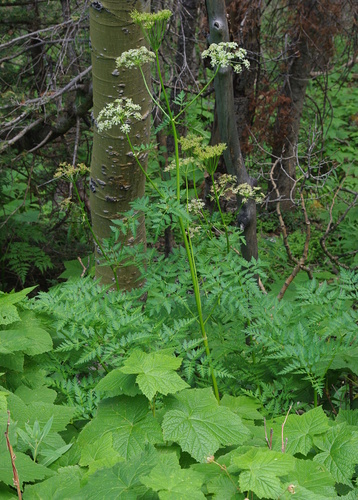
Ligusticum porteri, commonly called osha, is a substantial member of the carrot family (Apiaceae). It typically produces one or more stems that grow 50 to 130 centimeters (20 to 51 inches) tall, which are usually branched near the top and bear multiple flower umbels. The entire plant is noted for smelling like celery, especially after frosts. It has large roots with a dark brown, hairy outer surface, and a characteristic odor that combines butterscotch and celery notes. The root interior is yellow with a soapy inner pith. Osha has the typical Apiaceae appearance, with parsley-like leaves and double umbels of white flowers. A unique trait of this species is the reddish tint on the base of leaves where they attach to the root crowns. Osha root crowns are surrounded by a hairlike collar of dead leaf material. Fresh osha roots dry very quickly and are highly astringent; ingesting fresh roots can cause blistering of the mouth and human mucous membranes. This astringent effect is not present in dried roots. Roots from older plants are much stronger and more bitter than those from younger plants. Over time, osha plants grow into large clumps, and can reach a very large size. In parts of New Mexico, Colorado, and Utah, osha can grow 6 to 7 feet tall, forming circular colonies with dozens of root crowns growing from a single central root mass. It is recommended to harvest osha in the afternoon, because bears, which relish the plants, are known to visit them in the morning. Osha is strictly a mountain plant, most often found in deep, moist soils with high organic content, and it requires partial shade. It is widely distributed across the Rocky Mountains and the high mountains of northwestern New Mexico, and is most common in the upper limits of the subalpine zone. In the southern part of its range, it grows at elevations between 7,000 and 10,000 feet (2100 m to 3000 m), while in Utah and Wyoming it can grow as low as 5,000 feet (1500 m). Osha depends on mycorrhizal fungi; attempts to artificially cultivate it outside its native habitat have not been successful, though cultivation within areas where it naturally grows has been more successful. This plant has many uses in Native American medicine. The Zuni people use an infusion of the root for body aches, chew the root during curing ceremonies for various illnesses, and use crushed root mixed with water both as a body wash and taken internally for sore throat. The Rarámuri also use the root as herbal medicine. Spanish New Mexicans occasionally used very large amounts of Ligusticum porteri as an abortifacient or emmenagogue, though researchers George A. Conway and John C. Slocumb were unable to find anyone who reported successful use of the plant for these purposes. In 1997, the American Herbal Products Association Safety & Labeling Guidelines Subcommittee recommended that the plant be labeled as unsafe for use during pregnancy.