About Ligdia adustata (Denis & Schiffermüller), 1775
Scientific name: Ligdia adustata (Denis & Schiffermüller), 1775
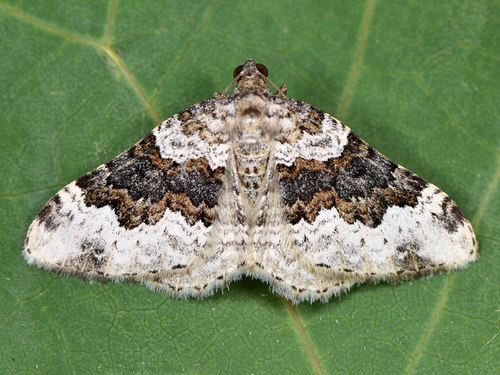
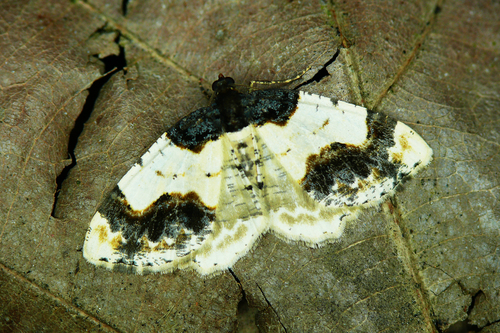
This species has a wingspan of 25 to 30 mm. The basic color of its wings is glossy white, creamy white, or light brownish. The basal area of the forewings is dark brown, and sometimes it can take on a slight blue-grey tone. A wavy blue-grey and brown band runs across the forewings near the outer margin. The hindwings are whitish, with wavy pale brown lines along their slightly wavy outer edges. The underside of the wings is suffused with reddish brown.
Larvae are moderately stout, and bright green with red dorsal spots. They have a red lateral blotch on the first to second abdominal segments, and red marks on their claspers. A rare grey-brown variety of the larva also exists. Pupae are red-brown, with blackish wings.
Ligdia adustata is a bivoltine species, meaning it produces two generations per year. Adult moths fly from April to May, and again from July to August, though the exact flight season varies widely based on location within the species' distribution range. These moths become active starting at dusk. The larvae feed on spindle trees, specifically Euonymus europaeus and Euonymus verrucosa, as well as on Berberis species. This species overwinters in the pupal stage.
This species is distributed across most of Europe and the Near East. It is common in a variety of environments, primarily in shrubs, deciduous forests, thickets, parks, and gardens.