About Libocedrus plumosa (D.Don) Sarg.
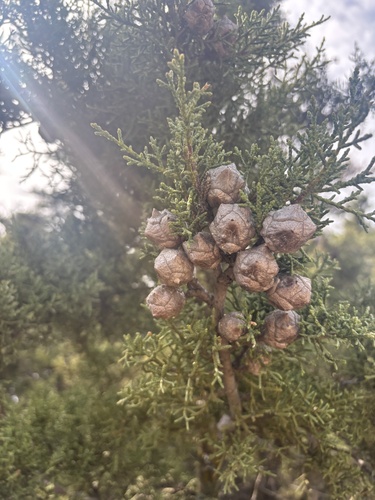
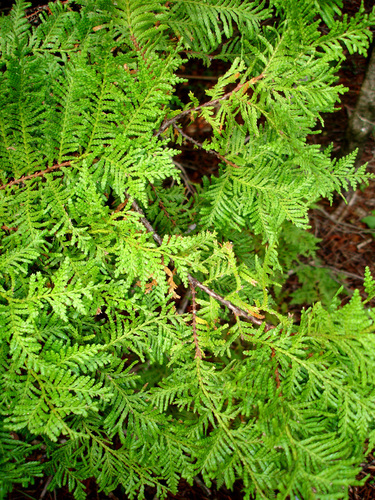
Libocedrus plumosa, commonly known as kawaka, is an evergreen coniferous tree. It grows to 30–35 metres (98–115 ft) in height, with a trunk that can reach up to 3 metres (9.8 ft) in diameter. Its bark is loose, fibrous, and light brown. Foliage is arranged in flattened sprays. Leaves are scale-like, growing in opposite decussate pairs on shoots; facial leaves measure 1–2 mm long and 1 mm broad, while lateral leaves are distinctly larger at 2–5 mm long and 1.5–2 mm broad. Seed cones are cylindrical, 12–18 mm long, with four scales each bearing a prominent curved spine-like bract. The scales are arranged in two opposite decussate pairs around a small central columella: the outer pair of scales is small and sterile, while the inner pair is large, with each inner scale holding two winged seeds. Seed cones mature six to eight months after pollination. Pollen cones measure 3–5 mm long. This tree is native to New Zealand; it occurs on the North Island from south of 35°S, and from Cape Farewell to the Whanganui Inlet area, and grows locally at the north end of the South Island near Nelson (41° S). It grows from sea level up to 600 metres (2,000 ft) in altitude in temperate rainforests. It is classified as a Near Threatened species on the IUCN Red List, and is endangered by habitat loss. In cultivation, kawaka has been planted as an ornamental tree in several parts of the British Isles, including as far north as Castlewellan, Northern Ireland.