About Libertia grandiflora (R.Br.) Sweet
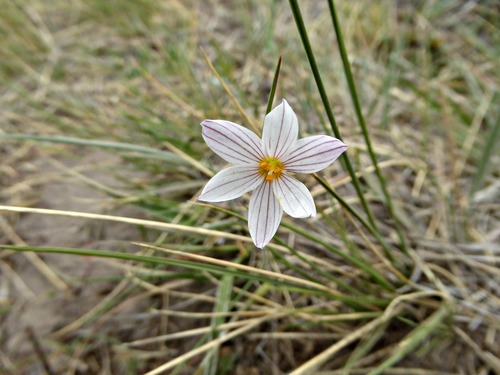
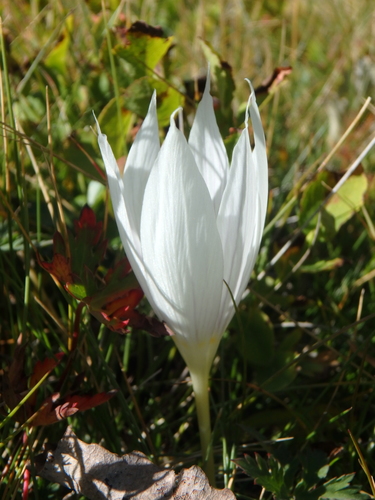
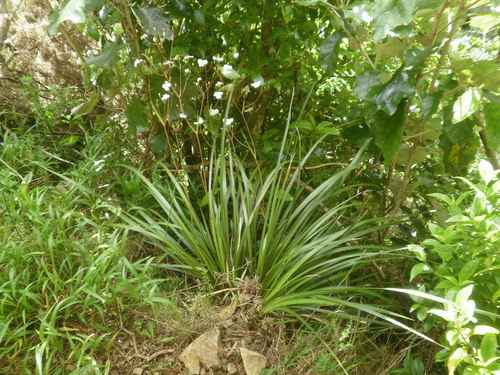
Libertia grandiflora is a species of perennial herb belonging to the family Iridaceae and subfamily Iridoideae. It grows to between 0.6 and 0.9 metres (2 feet 0 inches to 2 feet 11 inches) in height. Its leaves are long and narrow, measuring approximately 100–1400 mm by 2–12 mm, and their margins are often finely rough, or scabrid, in texture. The species' inflorescences (flower clusters) are tall, rise above the foliage, and have long peduncles. Its panicles are broad and openly branched, with each panicle holding 1 to 6 flowers attached to slender pedicels that are 10–50 mm long. The bracts of L. grandiflora are 40–130 mm long. Its flowers are 10–30 mm wide, with white tepals. Stamens are located at the base of the flower, bearing yellow anthers that are approximately 3 mm long. Fruits take the form of yellow, pear-shaped seed capsules measuring 6–14 mm by 4–8 mm; these capsules start green, mature to black, and split open at maturity, often with widely recurved valves. The seeds are bright tangerine-orange, 1–2 mm long, and are rounded or angular in shape. L. grandiflora is endemic to New Zealand. Its natural range covers the North Island, where it is widespread from North Cape to Wellington, though it is not found on the Volcanic Plateau. According to a 1967 record by Moore, the species was not known to grow south of the Nelson and Marlborough Regions of the South Island. Blanchon et al. (2002) reclassified the South Island populations as the separate species Libertia mooreae, meaning researchers currently recognize no taxonomically true L. grandiflora specimens from the South Island. In the 2023 New Zealand Threat Classification System assessment, L. grandiflora was ranked as "Not Threatened". L. grandiflora grows in lowland to montane forests. It typically occurs in open lowland forest fragments on steep slopes, ridgelines, bluffs, cliffs, and the banks or terraces of rivers and streams. It is also occasionally found growing on dry sunny banks. It prefers sites with partial shade, and is commonly found growing alongside other New Zealand endemic plants, including Kunzea ericoides and Podocarpus totara. All species of Libertia are pollinated by insects, but L. grandiflora is also capable of self-pollination. Its seeds are likely dispersed by wind.